
Josh Shapiro


Radical Grammar provides brief bios of prominent politicians.
History is not made by the grand pronouncements of kings and presidents, nor is it forged in the sterile, air-conditioned backrooms where political consultants plot their next ascent. History, rather, is the product of ordinary people—working people, struggling people—pushing against the immense structures of power and wealth that seek to contain them. Yet, to understand the machinery of the modern American state, we must examine the individuals who occupy these offices of authority, such as Pennsylvania Governor Josh Shapiro, a man whose career sits squarely at the intersection of institutional ambition, corporate patronage, and the perennial struggle of the working class.
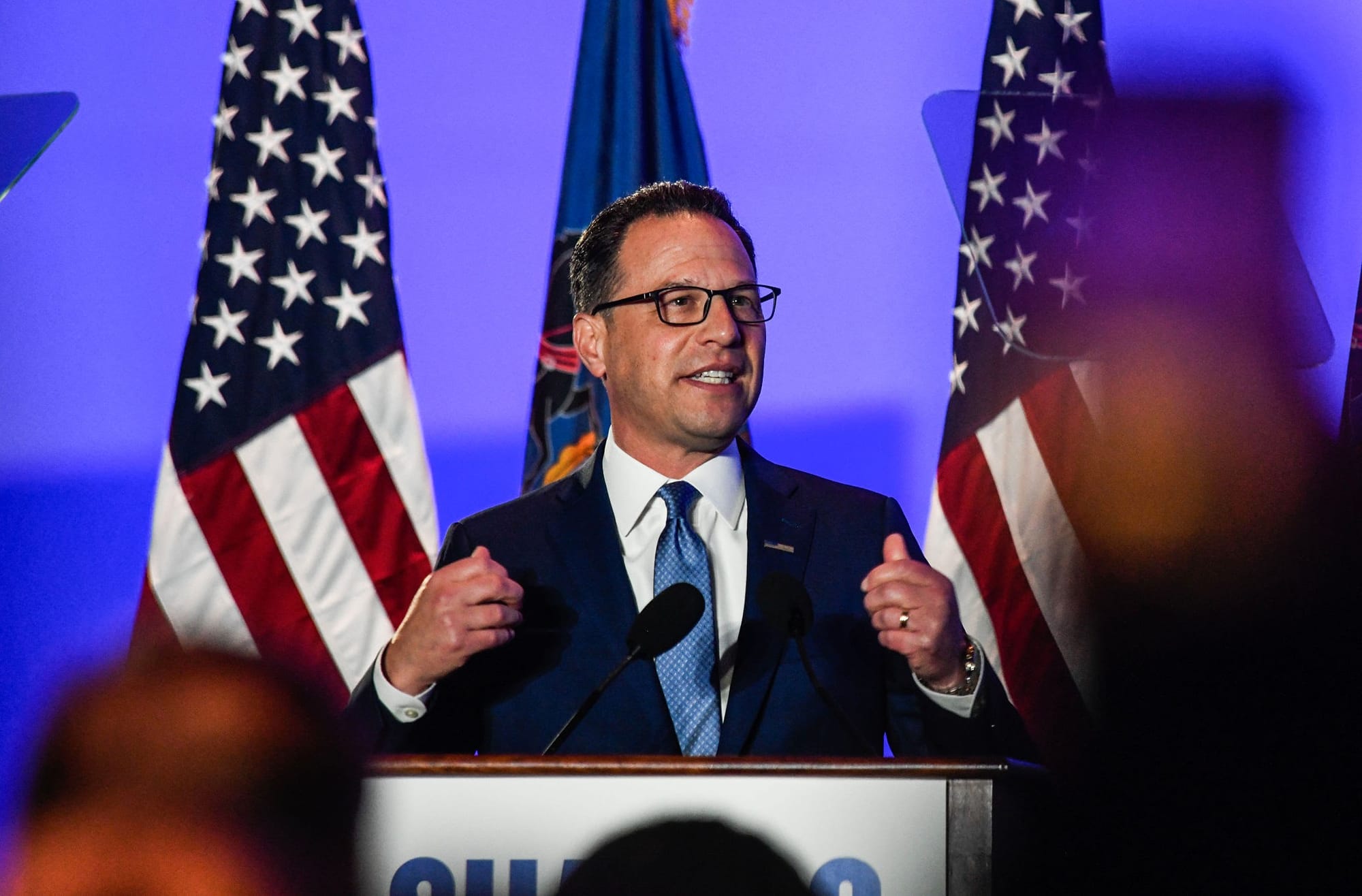
Shapiro’s political trajectory has been one of steady, calculated upward mobility. Born in Kansas City and raised in Montgomery County, Pennsylvania, he moved smoothly through the standard training grounds of the American political class: a degree from the University of Rochester, a law degree from Georgetown, stints as a legislative staffer in Washington, a state representative, a county commissioner, and eventually the state’s Attorney General before capturing the governorship in 2022.
To look only at his resume, however, is to miss the fundamental friction of his public life. In any honest assessment of a contemporary politician, we must reckon with both the tangible reforms they enact and the systemic allegiances that define them.
On the ledger of positives, Shapiro has often positioned himself as an administrator capable of making government function for the common citizen, particularly when compared to the reactionary forces that seek to dismantle basic civic institutions. As Attorney General, he took on entrenched corporate power in certain arenas, most notably leading the investigative grand jury that exposed decades of horrific child sexual abuse and institutional cover-ups within the Catholic Church, a monumental undertaking that forced a reluctant hierarchy into the light. He also helped secure substantial resources for Pennsylvania through national opioid litigation settlements, and as governor, he has championed investments in public education, signed tax credits aimed at working-class families, and utilized executive authority to block utility rate hikes, offering temporary relief to people pressed hard by the cost of living.
Yet, the ledger of negatives reveals the unavoidable compromises of a career politician operating within a system dominated by capital. For all the rhetoric of standing up for working people, Shapiro’s political operation is deeply enmeshed with the billionaire class and corporate interests that fund the modern Democratic Party. As he campaigns for reelection, his campaign war chest sits at tens of millions of dollars, fueled by massive contributions from elite donors—such as Silicon Valley investors and corporate executives—alongside powerful institutional PACs. When a politician relies on the investor class for millions in financial backing, a quiet, pervasive ceiling is placed on how far their economic reforms can go. Structural redistribution, radical labor protections, and the fundamental democratization of wealth are quietly ushered out of the room, replaced by public-private partnerships and business-friendly compromises.
Furthermore, controversies have periodically shadowed his ascent. Like many ambitious executives who lean heavily on law-and-order rhetoric, critics have pointed to instances where his office's policies or public stances reflected a cautious, poll-tested allegiance to political establishment norms rather than principled reform. During the national uprisings for racial justice, his balancing act as a prosecutor and mainstream leader drew sharp rebukes from organizers on the ground who felt the state's response favored property and police authority over systemic transformation. On the national stage, his ambition was laid bare during the 2024 vice-presidential sweepstakes, where his centrist posture and hawkish policy positions made him a favorite of the party's corporate wing while alarming progressive grassroots movements.
Shapiro’s personal wealth, while not matching the dynastic fortunes of some federal legislators, reflects his status as a successful corporate attorney and high-ranking public official, with an estimated net worth comfortably resting in the upper-middle to millionaire brackets—a world apart from the average Pennsylvania factory worker or service employee whose daily anxieties he routinely addresses in speeches.
Ultimately, Josh Shapiro represents the classic dilemma of modern liberalism: an intelligent, highly competent manager who can keep the machinery of government running smoothly and stave off the worst impulses of the far right, yet remains fundamentally tethered to the corporate order. True progress, however, has rarely been handed down from the governor's mansion by leaders financed by venture capitalists. It has always been won from the bottom up, by ordinary people organizing to demand a world that serves human need rather than private profit.