
NFL 2026 Season Preview

Today, the Jacksonville Jaguars and the Carolina Panthers
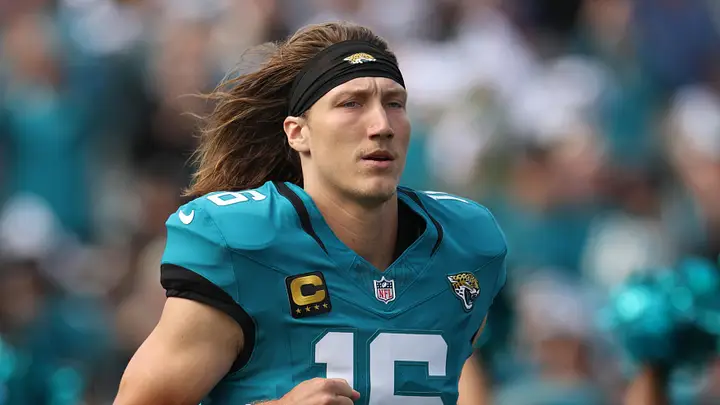
Let’s stop pretending. Let’s dispense with the manufactured mythology of the "Duval Revival." The national sports media desperately wants to sell you a feel-good story out of northern Florida—the tale of Liam Coen, the rookie coaching prodigy who waved a magic wand and dragged a four-win franchise to a historical 13-4 record in 2025. It’s a beautiful, glossy narrative designed for pregame hype packages. But the cold, unromantic reality of August 2026 is that the Jacksonville Jaguars are a team that played way over their skis, caught every single atmospheric break imaginable, and are now blindly walking toward a brutal regression to the mean.
The NFL is a league built on gravity, and what goes up must inevitably crash.
Head coach Liam Coen’s inaugural season was a masterclass in modern offensive design. He unlocked a version of Trevor Lawrence that looked entirely competent, stretching defenses and putting up points. But defensive coordinators don't sit on their hands during the winter. They spend six months dissecting tape, finding the tells, and figuring out exactly how to break a young play-caller's rhythm. Coen isn't a secret anymore. He is a known commodity with a target on his back, trying to replicate a outlier season while working under a new front-office regime led by General Manager James Gladstone and Executive Vice President Tony Boselli.
The central, fragile pillar of this entire operation remains Trevor Lawrence.
On paper, Lawrence’s 38 total touchdowns from last year argue that he has finally arrived as an elite AFC signal-caller. But look closer. Lawrence is still a quarterback who tends to panic when the pocket collapses from the interior, a player whose mechanics can get wildly loose when he is forced off his spot. The front office has given him a fascinating, yet highly volatile arsenal. Wide receiver Brian Thomas Jr. is a vertical terror, and when two-way phenom Travis Hunter is healthy, he is an absolute cheat code. But Hunter is returning from an IR stint, and counting on a college-to-pro transition where a kid plays heavy snaps on both sides of the ball is an organizational gamble that rarely ends well in a violent, 17-game professional season. Behind them, the backfield is leaning on unheralded names like Bhayshul Tuten and Chris Rodriguez Jr. to carry the physical load. If Lawrence is forced to carry this team on third-and-long every week because the running game stalls, the turnovers will return.
Defensively, the roster is a dangerous mirage.
To the casual observer, a unit that finished as the NFL’s top-ranked rushing defense looks like an impenetrable fortress. You see Josh Hines-Allen and Travon Walker on the edges, veteran Arik Armstead anchoring the interior, and Foyesade Oluokun cleaning up everything in the middle. It looks like a championship-caliber defense.
On the actual turf, it is a unit that cannot rush the passer.
For all the regular-season wins in 2025, Jacksonville's pass rush finished a pathetic 27th in the league in sacks. They didn't get to the quarterback; they relied on an unsustainable rate of opportunistic takeaways to bail them out. When you can't manufacture a consistent pass rush in the modern NFL, you are leaving an already thin, young secondary entirely exposed to the elements. If opponents stop handing the ball away, this defense is going to get shredded down the field by any quarterback with a clean pocket.
The schedule makers provided a soft landing with an easier slate on paper, but the division will offer zero comfort. The AFC South is no longer a localized punchline. C.J. Stroud and the Houston Texans are dynamic, angry, and built for a decade-long war. The Jaguars are entering 2026 with a massive weight of external expectations for a franchise historically allergic to prosperity.
This is the reality of the 2026 Jacksonville Jaguars. They are a good team being billed as a great one. They will win their share of games because Lawrence has too much talent to fail completely, and Coen's scripting will steal a few wins in September. But against the elite teams—the rosters built with genuine, complete depth rather than top-heavy stars—Jacksonville will be exposed. They are a franchise desperately trying to prove that their sudden rise wasn't a fluke, firmly stuck in the hardest place an NFL franchise can exist: the illusion of greatness.
Predicted Win-Loss Record: 9-8
Look at the glossy division championship banner hanging inside Bank of America Stadium and try not to laugh. The national sports media desperately wants to sell you a heartwarming redemption arc out of Charlotte—the tale of Dave Canales, the energetic quarterback whisperer who magically dragged an eight-win franchise to an improbable NFC South title in 2025. It is a beautiful, televised illusion designed to create hope where none belongs. But the brutal, unromantic reality of August 2026 is that the Carolina Panthers are a top-heavy, deeply flawed football team riding the high of an historically putrid division straight toward a cliff.
Winning a division title with a sub-.500 record isn't an arrival. It is a statistical anomaly. Canales earned plenty of praise from owner David Tepper for squeezing life out of a broken offense, but NFL defensive coordinators do not spend their offseasons applauding. They spend six months dissecting tape, finding tells, and neutralizing the element of surprise. Canales is no longer a secret. He is a known commodity with a target on his back, trying to replicate an outlier season with a roster that simply lacks the structural integrity to sustain it.
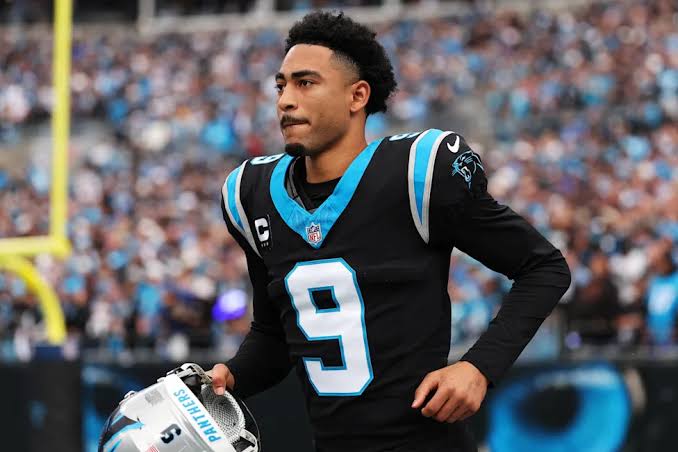
The central, fragile pillar of this entire operation remains Bryce Young.
The offense hinges completely on the hope that Young can make a massive, elite leap in his development. There were undeniable flashes of progress last year following his brief benching, but let’s be honest: Young is still an undersized signal-caller operating with a razor-thin margin for error. The physical decline of his protection when the pocket collapses from the interior is absolute. He is a small target who must see over collapsing pockets. When you pair an undersized quarterback with an offensive line prone to missed assignments against elite interior pass rushers, you are actively inviting disaster.
General Manager Dan Morgan attempted to build Young a functional, physical arsenal to ease the burden. Draft choice Tetairoa McMillan and second-year wideout Xavier Legette give Carolina a pair of massive targets. On paper, it looks brilliant. They are built to win contested catches and bail out a quarterback who lacks the raw arm talent to consistently fit the ball into tight windows. The backfield, a grinding timeshare between Chuba Hubbard and a recovering Jonathon Brooks, is competent enough to keep the chains moving on early downs.
But competency does not win championships. When Young drops back, the margin for error is zero. If he takes a wrong hit and his fragile frame gives out, the franchise is handing the ball to Kenny Pickett or Kyle Trask. That isn't a contingency plan. That is an organizational white flag.
Defensively, the roster is a dangerous mirage. To the casual observer, Ejiro Evero's depth chart looks like an ascending unit. Derrick Brown remains a relentless, mountain of an edge-and-interior force, a player whose motor simply never idles. Jaycee Horn is still a lockdown cornerback talent, actively defying his own history of soft-tissue injuries. They added veteran edge rusher Jaelan Phillips and linebacker Devin Lloyd to a front seven that looks imposing on a whiteboard. If you look at the names, it resembles a defense capable of locking down the conference.
On the actual turf, it looks like a unit desperately trying to hide its lack of depth.
Horn and Phillips carry the heavy physical toll of significant past injuries. Football is a game of ruthless attrition, and asking a select few stars to consistently carry a stagnant, young offense is a recipe for a late-season collapse. By week ten, the minor dings become lingering, season-altering strains. The explosion off the line slows by a fraction of a second. If the front seven fails to manufacture a consistent, organic pass rush, a thin secondary is going to get absolutely shredded down the seams by anyone with a functional arm.
The schedule makers and the division provide no relief. The NFC South will not remain a localized punchline forever. The Atlanta Falcons and Tampa Bay Buccaneers are retooled, angry, and operating with far more complete rosters. The Panthers are entering 2026 carrying the heavy psychological burden of real external expectations—a weight this specific young core has never had to bear. If they fall behind by two scores, they simply do not possess the offensive elasticity to get back into the game.
This is the reality of the 2026 Carolina Panthers. They are a collection of unproven young pieces and fragile stars assembled to sell the illusion of contention. They will undoubtedly beat the bad teams on their schedule, because the sheer talent of Brown and McMillan guarantees a baseline of competitiveness. They will win ugly, grinding games in October that will give the local radio callers false hope.
But against the elite—against the teams with genuine championship aspirations and dynamic, multi-dimensional depth—Carolina will be exposed. They are a building project that received a premature coat of championship paint, terrified of the bottom, and firmly stuck in the worst place an NFL franchise can possibly exist: the suffocating middle.
Predicted Win-Loss Record: 6-11