
NFL Preview

Today: Pittsburgh Steelers and the Chicago Bears
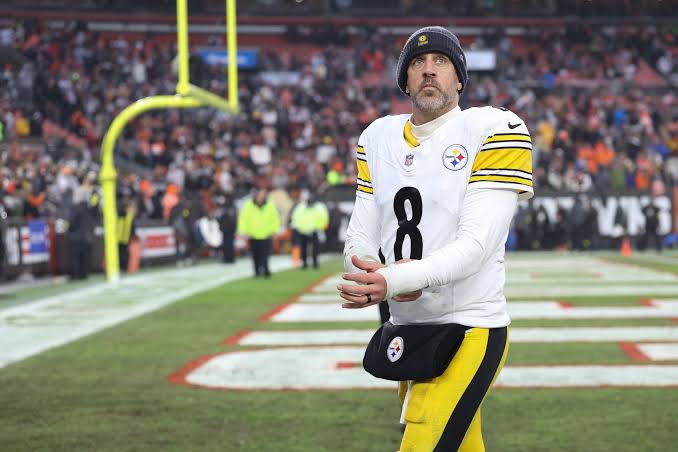
Let’s stop pretending. Let’s dispense with the manufactured mythology of the Pittsburgh Steelers. The national media desperately wants to sell you the same tired narrative of blue-collar resilience, the terrible towels, and a franchise that somehow defies the gravitational pull of a rebuild. But the brutal, unromantic reality of August 2026 is that the Steelers are a top-heavy, aging football team blindly walking toward a cliff.
The transition from Mike Tomlin to Mike McCarthy isn't a rejuvenation; it’s a philosophical Hail Mary. Tomlin spent years squeezing nine-win seasons out of wildly flawed rosters through sheer motivational force and defensive grit. The Rooney family, allergic to the very concept of a multi-year rebuild, pivoted in January by hiring McCarthy. This is a man whose career arc is an ongoing study in inheriting elite quarterbacks, running rigid offensive systems, and consistently failing when high-leverage situational awareness is required. He brings an offensive mindset that looks good in a playbook but frequently stalls out in the red zone. McCarthy is not here to lay a new foundation. He is here to execute a desperate patch job, reuniting with his former Green Bay quarterback in a bid to recapture a past that is long gone.
The central, fragile pillar of that patch job is Aaron Rodgers.
At forty-two years old, Rodgers is no longer a quarterback as much as he is a historical artifact held together by athletic tape, strict dietary discipline, and unyielding stubbornness. There are still flashes of the old genius—the impossibly quick release, the pre-snap recognition that borders on the clairvoyant. But the physical decline is glaring and absolute. The mobility that once allowed him to extend plays, break the pocket, and mentally destroy opposing defensive coordinators has vanished. He is a stationary target. He operates behind an offensive line relying heavily on young, developing players like Troy Fautanu, Zach Frazier, and Mason McCormick. When you pair a completely immobile, forty-two-year-old quarterback with an offensive line prone to missed assignments, you are inviting disaster.
McCarthy wants a quick-hitting, rhythm-based passing game to protect his quarterback. General Manager Omar Khan attempted to build Rodgers a functional, veteran-heavy arsenal to execute it. Trading for DK Metcalf and signing Michael Pittman Jr. gives Pittsburgh a pair of massive, physical receivers. On paper, it looks brilliant. They are built to win contested catches and bail out a quarterback who lacks the zip to consistently fit the ball into tight windows. The backfield, a grinding timeshare between Jaylen Warren and free-agent addition Rico Dowdle, is competent enough to keep the chains moving on early downs.
But competency does not win the AFC North. When Rodgers drops back, the margin for error is zero. If he takes a wrong hit and the inevitably fragile frame gives out, the franchise is handing the ball to Mason Rudolph, Drew Allar, or Will Howard. That isn't a contingency plan. That is an organizational white flag.
Defensively, the roster is a dangerous mirage. To the casual observer, the depth chart is terrifying. T.J. Watt remains a relentless, psychotic edge-rushing force, a player whose motor simply never idles. Cameron Heyward is still anchoring the interior of the defensive line, actively defying the biological laws of aging. They added veteran cornerback Jalen Ramsey to a secondary that already features Jaquan Brisker and DeShon Elliott. They have Patrick Queen and Payton Wilson commanding the middle of the field. If you look at a whiteboard, it resembles a championship defense capable of locking down the conference.
On the actual turf, it looks like a unit desperately trying to outrun Father Time.
Watt, Heyward, and Ramsey carry the physical toll of thousands of violent collisions. Football is a game of ruthless attrition, and asking a veteran core to consistently carry a stagnant, aging offense is a recipe for a late-season collapse. By week ten, the minor dings become lingering, season-altering strains. The explosion off the line of scrimmage slows by a fraction of a second. Ramsey's recovery speed dips. Defensive coordinator Patrick Graham will have to manufacture pressure through exotic schemes because his veteran stars will not be able to rely strictly on raw, overpowering athleticism to win one-on-one matchups for seventeen straight games.
The schedule makers and the division provide no relief. The AFC North is an absolute meat grinder. Joe Burrow and Lamar Jackson are operating at the peak of their physical primes. The Bengals and Ravens are constructed for the modern NFL—dynamic, explosive, and capable of erasing a ten-point deficit in four minutes. The Steelers are a heavy, plodding vintage sedan trying to drag-race modern sports cars. If they fall behind by two scores, they simply do not possess the offensive elasticity to get back into the game. They cannot score thirty points a game, which means they must play perfect, mistake-free football every single Sunday.
This is the reality of the 2026 Pittsburgh Steelers. They are a collection of fading stars assembled to sell the illusion of contention. They will undoubtedly beat the bad teams on their schedule, because the sheer talent level of Watt and Metcalf guarantees a baseline of competitiveness. They will win ugly, grinding games in October that will give the local radio callers false hope.
But against the elite—against the teams with genuine Super Bowl aspirations and dynamic, multi-dimensional offenses—Pittsburgh will be exposed. They are a desperate franchise clinging to the ghosts of its past, terrified of the bottom, and firmly stuck in the worst place an NFL franchise can possibly exist: the suffocating middle. The bill for years of delayed rebuilding has arrived, and it is going to be paid on the field.
Predicted Win-Loss Record: 7-10
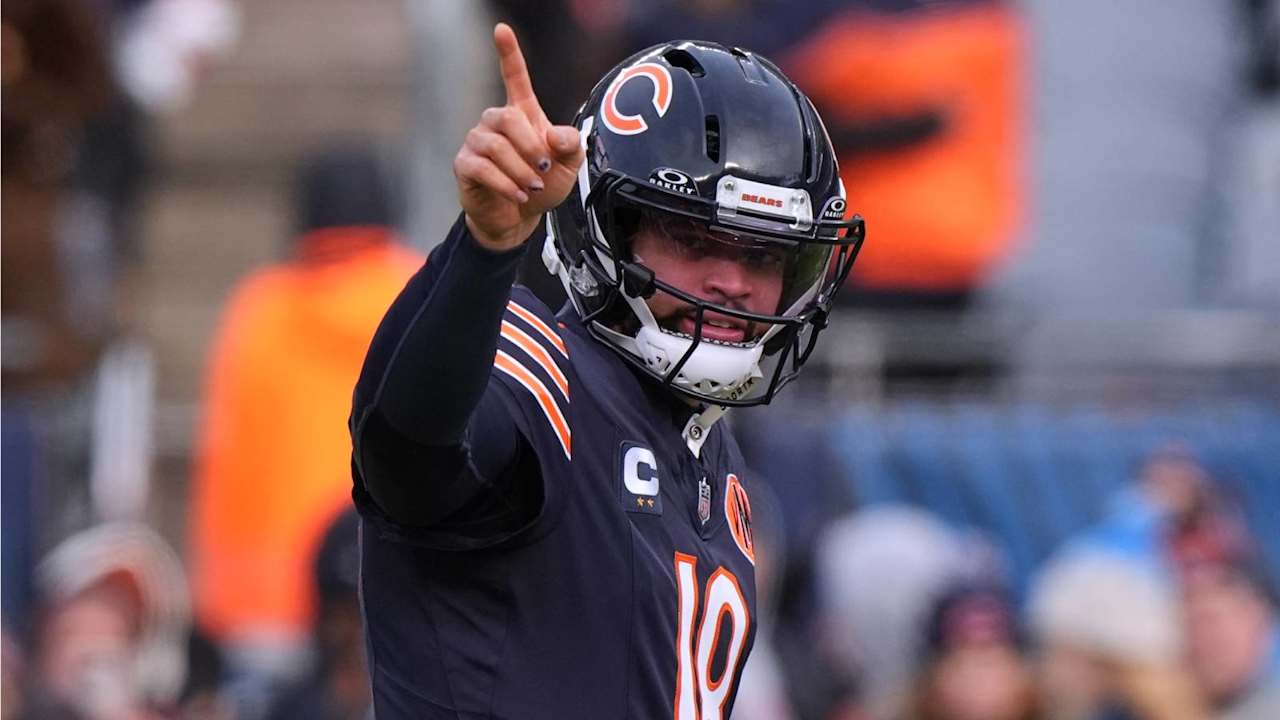
Let’s dispense with the breathless hyperventilating coming out of the lakefront this August. The national media has completely lost its collective mind, looking at an 11-win season and a playoff trip and immediately crowning the Chicago Bears as the new kings of the NFC.
We are standing here in the sweltering heat of late summer 2026, and it is time to inject a heavy dose of cold, sober reality into the hype machine.
Ben Johnson is a brilliant offensive mind—there is no denying the schematic artistry he brought to Halas Hall in his debut season. He took Caleb Williams, streamlined his process, and turned an erratic rookie into a functional, dynamic orchestrator of a high-flying attack. But let's look at what actually happened when the calendar turned to January: a tight, agonizing divisional-round exit against the Rams where the limitations of this roster were laid bare in high-definition color.
Now, everyone is projecting linear, uninterrupted growth, as if the NFL operates on a neat upward spreadsheet. It doesn't.
The front office tried to aggressively build around Williams this offseason, overhauling the trenches by bringing in veteran guard Joe Thuney to solidify an offensive line that still features glaring vulnerabilities. They added Luther Burden III to a wide receiver room already featuring Rome Odunze and DJ Moore, creating a paper-mache constellation of pass-catchers that looks terrifying in 7-on-7 drills.
Yet, when you watch this offense grind through training camp, the underlying anxiety remains. Williams is undeniably talented, capable of making off-schedule magic that leaves defensive coordinators weeping. But he still occasionally hunts for the home run ball when the situation demands a boring, chain-moving checkdown. The running game remains heavily reliant on a timeshare, and if Thuney or the tackle spots suffer injuries behind a line that lacks elite depth, the entire operation can stall out into ugly, disjointed three-and-outs.
Defensively, the regression alarms are flashing red, even if nobody in Illinois wants to hear them. Dennis Allen is running the defense, bringing a veteran coordinator's hand to a unit that overperformed in situational metrics a year ago. T.J. Edwards and Montez Sweat are still holding down their respective levels, but the backend depth took a hit with departures in the secondary, and the pass rush outside of Sweat is a collection of hopeful rotation pieces rather than proven terror-bringers. When you play in a division featuring the offensive firepower of Detroit, Green Bay, and an improving Minnesota squad, defensive margins for error are microscopic.
And that schedule? It is an absolute buzzsaw. The NFC North has evolved into the most cutthroat division in football, a relentless weekly demolition derby where easy wins simply do not exist. Factor in cross-conference clashes with elite powerhouses, and the path to replicating last year's record looks less like a stair-step and more like scaling a sheer ice wall.
Analysts look at the young core, see the shiny offensive coordinator, and pencil the Bears in for another double-digit win cruise. They want to believe the decades of organizational wandering in the desert are permanently over. But the NFL is a league of ruthless regression to the mean. Teams that live on explosive plays and razor-thin margin victories one year frequently find themselves on the wrong side of those coin flips the next when health fluctuates and opponents figure out the tendencies.
The 2026 Chicago Bears are talented, electric, and entirely capable of giving you heart palpitations every single Sunday. But they are also a young, momentum-dependent team walking straight into a much tougher target on everyone’s calendar. They will have their moments of breathtaking brilliance, but the weight of a brutal schedule and the inevitable growing pains of a young roster will catch up.
Predicted Win-Loss Record: 9-8
Tomorrow: The Jacksonville Jaguars and the Carolina Panthers