
NFL Preview

Today: New England Patriots & Philadelphia Eagles
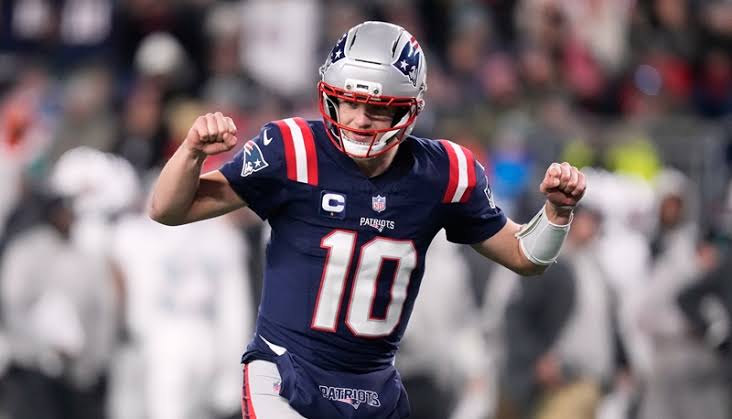
The Morning After the Fantasy: Why Reality is Knocking for the New England Patriots
We will be previewing every NFL team before the season starts, kicking off our extensive coverage of America's real pastime. Follow this space for predictions, rankings, and the full emotional spectrum that is the NFL season.
For a few intoxicating months in the winter of 2025, Foxborough felt like a time warp. The ghosts of the dynasty were watching carefully. Out went the stale, post-Belichick malaise, and in came Mike Vrabel—stubborn, square-jawed, barking orders—alongside a twenty-three-year-old quarterback named Drake Maye who played football like he was personally insulted by every defensive coordinator in the league. They won 14 games. They sliced through an admittedly tissue-thin regular-season schedule with the breezy indifference of a varsity squad playing a Friday night scrimmage. They rode that wave all the way to the Super Bowl, high on adrenaline, raw belief, and a healthy dose of good fortune.
And then came the Seattle Seahawks.
If you want to understand the 2026 New England Patriots, you have to start with that February night, where Mike Macdonald’s defense turned the Patriots' offensive line into a pile of smoking rubble. A 6-to-1 sack differential. Three turnovers. A merciless, clinical dissection that exposed every single structural crack in a 14-win facade. Cinderella was run over by a steamroller.
Now, the calendar turns, the confetti has been swept from Gillette Stadium, and the bill has arrived.
On paper, the 2026 Patriots are objectively a more talented football team than the one that caught lightning in a bottle a year ago. General manager Eliot Wolf and Vrabel didn’t spend the offseason admiring their runner-up medals (especially Vrabel!), they went shopping. The headline, of course, dropped on June 1, when the Patriots sent a future first-round pick packing to land A.J. Brown. Let’s be entirely honest: Brown has never caught passes from an arm talent like Maye, and Maye has never had a wide receiver who can body-slam cornerbacks downfield quite like him. Pair Brown with Romeo Doubs—snatched away from Green Bay to lock down the slot—and suddenly Josh McDaniels’ playbook has teeth that can chew through any secondary in the conference.
McDaniels is back pulling the strings, orchestrating an offense that finished third in total yards and second in scoring last year. And at the epicenter of it all is Maye. The kid went from an up-and-down rookie to an MVP runner-up in a blink. He completed 72 percent of his passes, threw for nearly 4,400 yards, and made plays outside the pocket that felt illegal in 48 states. With Brown drawing double teams and clearing space, Maye isn’t just positioned to repeat; he’s positioned to terrorize.
Up front, the offensive line—coached by veterans like Doug Marrone—faces the ultimate audit. Protecting Maye is an existential necessity. If Marrone and his staff can piece together a cohesive unit that keeps their franchise quarterback upright, the ceiling of this offense is limitless. But as last year's championship game proved, a leaky pocket can turn an elite offense into a stranded ship in sixty short minutes.
So why does the vibe around Route 1 feel more like an impending root canal?
Two words: The schedule.
Last season, critics carped—fairly—that New England’s historic win total was supercharged by the easiest strength of schedule since the 1999 St. Louis Rams. Well, the football gods are balancing the ledger with a vengeance this fall. The Patriots don’t get a gentle easing-in period. They open on September 9 in Seattle—yes, that Seattle—for a primetime Super Bowl rematch at Lumen Field. From there, the first month is an absolute gauntlet against a procession of 2025 playoff teams. Rational analysts are openly projecting a 1-3 start. A team that tasted champagne in January could easily find itself staring up at a sub-.500 record before the leaves even turn.
And then there are the defensive questions that a shiny new wide receiver room cannot mask.
Vrabel’s defense plays hard, but it has distinct vulnerabilities. The pass rush, in particular, inspires a cold sweat. Harold Landry III’s knee is a persistent, nagging wildcard, leaving the edge rotation thin and forcing unproven commodities like rookie Gabe Jacas into baptism-by-fire scenarios. They added savvy veterans like Kevin Byard in the secondary and Dre’Mont Jones up front, but the depth is paper-thin. If an injury bug bites this front seven, opposing ground games are going to treat Foxborough like a toll-free highway.
In the AFC East, the Buffalo Bills aren't going anywhere, and the division race is going to be a knife fight in a phone booth.
Here is the cold, unvarnished reality for New England: The 2026 Patriots will almost certainly take a step backward in the win column. Winning 14 games in the NFL is a statistical outlier; repeating it requires flawless health and a lot of breaks. A 10-7 finish, a wild-card berth, and a grueling road playoff game feels like the accurate, sober destination for a roster still under construction.
Yet, nobody in their right mind should feel sorry for them. Drake Maye is too explosive, Vrabel is too relentless, and the AFC has been formally put on notice. The fairy tale is over, but the grit is real. And in Foxborough, that’s usually when things get interesting.
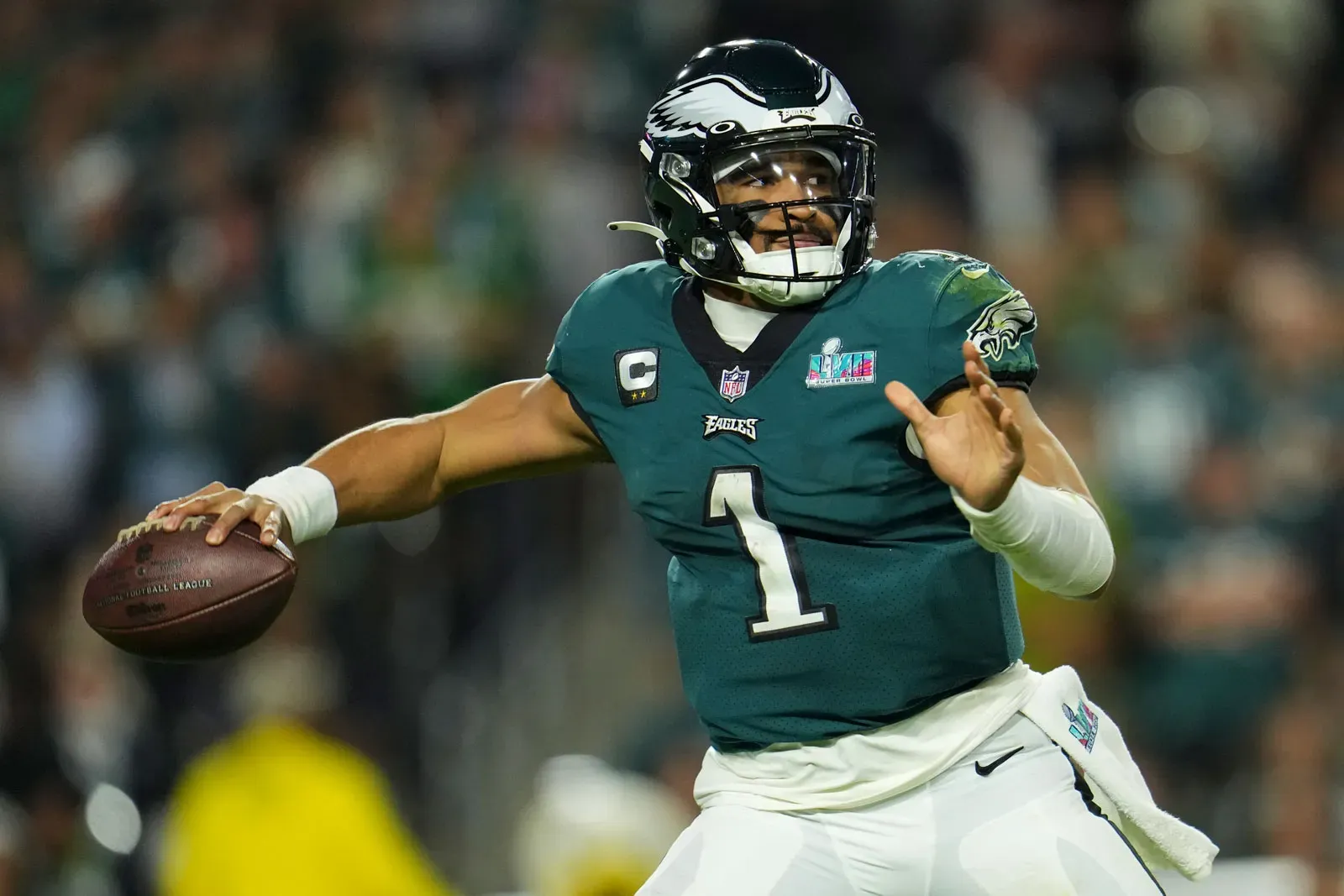
The Bleeding Edge: Inside the Volatile, High-Stakes Reality of the 2026 Philadelphia Eagles
There is no middle ground in Philadelphia. You are either scaling the greased poles of Broad Street with a belly full of cheap lager and unbridled, delusional triumph, or you are Public Enemy Number One, checking your rearview mirror because a guy named Sal from South Philly is ready to give you a twenty-minute dissertation on why your route running is an insult to the memory of Chuck Bednarik.
It is August 2026 at the NovaCare Complex, and the air doesn’t smell like football; it smells like raw panic wrapped in burnt garlic and afternoon humidity.
To understand the upcoming Philadelphia Eagles season, you have to look past the gleaming neon lights of their recent past. Just a heartbeat ago, they were hoisting the Lombardi Trophy after a dismantling of Kansas City in Super Bowl LX. The confetti has long since been vacuumed from the turf of Lincoln Financial Field, and the city’s collective euphoria has curdled into that familiar, twitchy paranoia that only Eagles fans can master. Because in Philadelphia, yesterday’s championship ring is just a paperweight if tomorrow’s morning walk-through goes sideways.
And lately, things have been going sideways with the velocity of a greased bowling ball.
Let’s start with the elephant in the room—or rather, the premier wide receiver who is currently catching passes in New England. When Howie Roseman pulled the trigger on June 1 to ship A.J. Brown off to the Patriots for a future haul of draft capital, it wasn't just a roster move; it was a bloodletting. Brown’s mercurial brilliance, his sideline blowups, his absolute unwillingness to suffer mediocrity in silence—it had finally ground against the franchise's internal gears until something snapped. Trading a talent of that magnitude right before training camp tells you everything you need to know about where this front office’s head is at. They are recalibrating, restructuring, and bracing for impact.
To plug the crater left by Brown, Roseman did what he always does: he shopped in the clearance aisle and crossed his fingers, bringing in Hollywood Brown and trading for Green Bay’s Dontayvion Wicks. They are fine football players. None of them are A.J. Brown. None of them command double-teams the moment they step off the team bus, and none of them possess that terrifying, alpha-dog gravity that forces defensive coordinators to wake up in a cold sweat at 3:00 AM.
Then there is the coaching carousel, which has reached a point of dizzying absurdity. Nick Sirianni enters his sixth season at the helm, but he is breaking in his fifth offensive coordinator in five years. Step on up, Sean Mannion. Fresh out of a headset and into the absolute meat grinder of the City of Brotherly Love, Mannion is tasked with modernizing an offense that looked increasingly stagnant and predictable down the stretch of last season. Compounding the turbulence is the departure of legendary offensive line coach Jeff Stoutland, whose gruff, genius-level molding of the "City of Brotherly Shoves" trenches was the foundational bedrock of everything good in Philadelphia for over a decade. Chris Kuper inherits the holiest of trenches, stepping into a room that is facing a ticking clock of monumental proportions.
Which brings us to the sunset.
During training camp, right tackle Lane Johnson stood in front of reporters and delivered a quiet, sobering truth: at thirty-six years old, this is likely his final ride. For thirteen seasons, Johnson has been the immovable pillar of this franchise—the bodyguard who handled every elite pass rusher the NFC East could throw at him while quietly battling the anxiety and depression he has spoken about with such courageous transparency. When Johnson walks away, a massive, irreplaceable piece of Philadelphia’s organizational soul goes with him. The Eagles know it, which is why they spent a high draft pick on 6-foot-9, 345-pound mountain Markel Bell. But when you replace a Hall of Fame-caliber tackle with a rookie, you have no option but to hope for the best. You survive, you bleed, and you pray the ankle holds up until January.
And then, looming over every single snap at the NovaCare Complex, is the man under center.
Jalen Hurts is living inside a media microscope so intense it could start a brush fire. A year ago, he was a Super Bowl MVP, lifting the Lombardi with a poise that felt surgical. Today, the narrative has curdled into a relentless, exhausting debate about whether he can consistently throw over the middle, whether his contract is an albatross, and whether the locker room is fracturing.
Proof of this absurd pressure cooker happened in mid-August, when the Eagles' official social media team posted a routine practice clip of star cornerback Quinyon Mitchell intercepting a pass from Hurts. In any other market, it's a footnote on a hot Tuesday. In Philadelphia, it triggered a full-scale regional panic attack. Within hours, the clip had millions of views, national sports talk shows were dissecting Hurts' mental state, and former players were openly wondering on television if the social media coordinator was about to be fired for high treason. It was frantic, hysterical, and entirely, beautifully Philadelphia.
Vic Fangio’s defense remains the steadying anchor of this operation. With young studs like Jalen Carter, Cooper DeJean, and Quinyon Mitchell flying around, the defense has teeth. They will hit you, they will confuse you, and they will make life miserable for opposing quarterbacks. But even Fangio’s scheme can’t completely mask an offense that is undergoing an identity crisis on the fly.
So, what are we to realistically expect from the 2026 Philadelphia Eagles?
Forget the sugar-coated projections of a seamless march back to the championship game. This is a transition year disguised as a contender. The NFC East is a knife fight in a phone booth, with Washington and Dallas breathing down their necks, and the loss of Brown leaves an offensive ceiling that feels distinctly capped compared to the juggernauts of a year ago.
They will win games because Sirianni’s teams are stubborn, because the defense is talented, and because Jalen Hurts possesses a quiet, unflappable resilience that doesn't crack under the weight of a million screaming critics. But they are flawed, bruised, and leaning heavily on sentimentality as much as strategy in what might be the final hurrah for a generation of core veterans.
A 10-7 or 11-6 finish, a chaotic wild-card weekend, and a season defined by white-knuckle drama feels written in the stars. In Philadelphia, they wouldn't want it any other way. Kinda.
Tomorrow: The Pittsburgh Steelers and the Chicago Bears