
That Night

Let’s talk about family for a minute. We like to think of the family unit as a fortress. We build these imaginary walls out of Sunday dinners, shared childhood bedrooms, and old holiday photographs where everyone smiles like they mean it. We tell ourselves that blood is the ultimate contract, signed in the womb and binding until the graveyard. We say "blood is thicker than water" without ever really stopping to consider what that thickness implies. It implies something heavy. Something dark. Something that clots when it gets exposed to the open air.
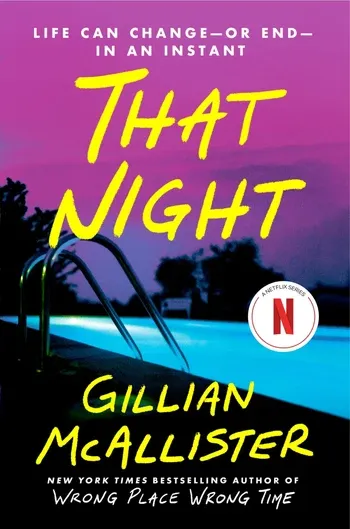
The truth is, family isn't just a fortress. Sometimes, it’s a trapdoor. And nobody understands the mechanics of that trapdoor quite like Gillian McAllister. In her magnificent, white-knuckle ride of a thriller, That Night, she takes that comforting myth of sibling loyalty and drags it out into the high-beams of a rented Fiat on a pitch-black European road. She doesn't just ask you what you would do to protect your family; she forces you to sit in the passenger seat while the wheels spin and the engine block cools with a sickening, mechanical click.
Imagine it. You’re on vacation. You’re supposed to be escaping the mundane horrors of everyday life, drinking wine under a foreign sky, breathing in air that smells like ancient stone and olive trees. But then the dark comes down, the kind of absolute, velvet dark you only find in places where history is buried miles deep. Frannie is behind the wheel. Maybe she was distracted. Maybe she was looking at the scenery or adjusting the radio. It doesn't really matter, because the end result is the same. A sudden thump. The sound of a human body hitting metal and glass, a sound that McAllister describes with a visceral precision that will make the hair on your arms stand up. It’s a hollow, definitive sound. The sound of a life ending and a nightmare beginning.
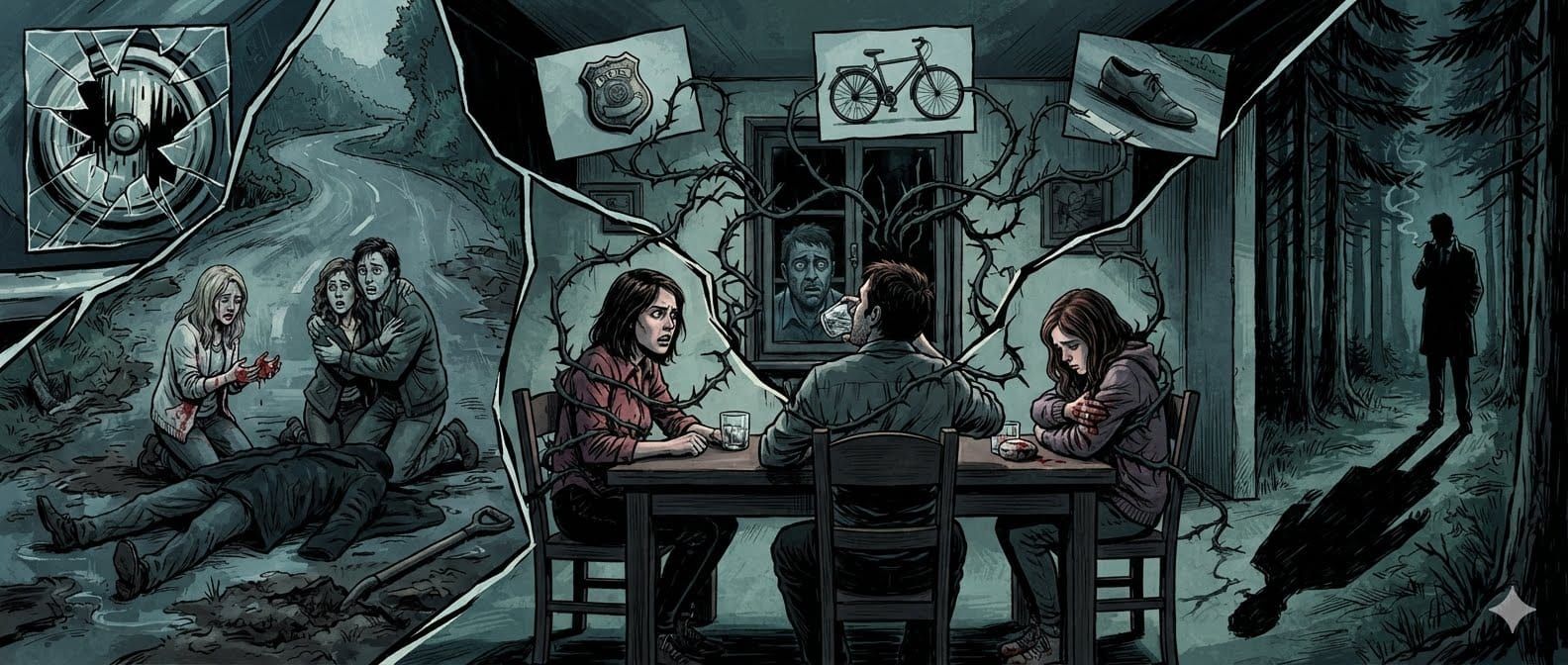
Frannie doesn't call the police. That’s the first domino, and when it falls, it hits with the weight of a sledgehammer. Instead, she reaches for her phone and makes two desperate, breathless calls. One to her sister, Frankie, and one to her brother, Ben. They are the bookends of her life, the ones who are supposed to know what to do when the world breaks. And because they are family, because that ancient, heavy contract is still active, they come running through the fog. They find their sister on her knees in the wet dirt, her hands and clothes stained with a terrible, bright crimson, weeping over an unmoving shape in a tweed jacket.
What happens next is where McAllister really starts to turn the thumb-screws. They don't do the right thing. If they did, we’d have a procedural drama, the kind of story where people talk about forensic evidence. But King fans know that the best stories happen when people choose the dark path because they think it’s the only way to keep the light shining. Frankie and Ben look at the body, they look at their weeping sister, and they make a pact. They get the trenching tool out of the boot of the car. They drag the stranger into the pine grove and they bury him beneath the roots of ancient trees. They make a promise, a binding vow whispered in the dark: we will never tell a soul.
For a day or two, you think maybe they got away with it. You think the fortress held. But a secret like that isn't a stone you leave in the woods; it’s a living thing. It’s an infection. When Inspector LeClair comes knocking on the door of their rented villa, wearing a gray suit that smells of cheap tobacco, the infection begins to spread. He asks about a missing local laborer named Giraud. He mentions a bicycle found near the ruins. He doesn't accuse them, not yet, but he looks at the scratch on the station wagon. He looks at Frannie’s white-knuckled grip on her coffee mug.
And that is where the real horror of That Night takes hold. The police are an outside monster, but the true terror of this book is internal. It’s the slow, agonizing dissolution of trust between three people who thought they knew each other completely. McAllister shows us how a shared lie doesn't bind people together; it pushes them apart like magnets with the same polarity. Ben starts hitting the gin early, staring out at the pine grove with haunted eyes. Frankie’s maternal protectiveness curdles into an iron-fisted panic, her kitchen knife coming down just an inch away from her own fingers as she demands silence. And Frannie is drowning in the memory of the sound, realizing they left one of the dead man's shoes behind on the road.

Pretty soon, the questions aren't just about what the police know. The questions are about what the person sitting across the dinner table is thinking. You start to wonder if your brother is going to walk down to the gendarmerie to save his own skin. You start to wonder if your sister is whispering behind your back, plotting to lay the whole thing at your feet. Every look becomes a calculation. Every silence becomes a threat.
McAllister has given us a masterful, claustrophobic masterpiece that breathes down your neck from the very first page. It’s a book that demands to be read in one sitting, preferably with the doors locked and the porch light burning bright. It reminds us that the scariest monsters aren't the ones lurking in the Maine woods. The scariest monsters are the ones who share your DNA, sitting right next to you, deciding exactly how much your survival is worth to them. Go buy it, Constant Reader. But don't say I didn't warn you when you start looking at your own siblings a little bit differently.