
The 1970s - part two

The Year the Floor Dropped Out
Nineteen-seventy didn't start with a bang so much as it started with a trapdoor dropping out from under the floorboards. April 30th. Richard Nixon gets on the tv to tell the country he's shoving the war right across the border into Cambodia. This is the same guy who ran two years earlier practically winking at voters, acting like he had some secret blueprint to wind the whole mess down. ) Instead, he takes a match to a neutral country and fans the flames.
Campuses across the country came unglued. Buildings occupied, strikes, troops called out. And then Ohio National Guard troops went to Kent State on May 4th and put live rounds into a crowd of kids. Four dead. Allison Krause, Jeffrey Miller, Sandra Scheuer, William Schroeder. Some of them weren't even part of the demonstration—just kids walking to class. Mary Ann Vecchio kneeling over Miller's body with her mouth wide open in a scream became the snapshot of the entire century because it laid bare what happens when a government turns its own machinery on its people.
The textbook version treats it like a tragedy and rolls credits. But that ignores the shockwave. Neil Young heard the news, wrote "Ohio" almost before the ink was dry, and CSNY rushed it onto vinyl so fast it was on the radio while the blood was still fresh. No coded lyrics, no diplomatic hedging. "Tin soldiers and Nixon coming," right there on the airwaves, because the country was too furious for metaphors.
That single song was the canary in the coal mine for the whole decade. Kent State was the moment the public stopped giving a damn about institutional authority. Watergate wasn't some lightning strike out of nowhere two years later—it was the inevitable finish line for a country that had looked right down the barrel of state violence and decided it would never believe another word coming out of Washington. The Pentagon Papers fed a stomach that Kent State had already emptied.
And the bizarre part is how the rest of the world kept spinning right alongside the wreckage. While campuses were barricading themselves, Paul McCartney was dropping a messy solo record and the Beatles were officially tearing apart. Johnny Cash strolled into the White House in April, took a hard pass on playing "Okie from Muskogee" when Nixon's people practically begged for it, and sang "What Is Truth" instead—a song sticking up for the exact same long-haired kids the administration was treating like public enemies. Cash was about as far from a counterculture icon as you could get, a God-fearing Southern conservative, but even he wouldn't sit in the executive mansion and sing the establishment's lullaby.
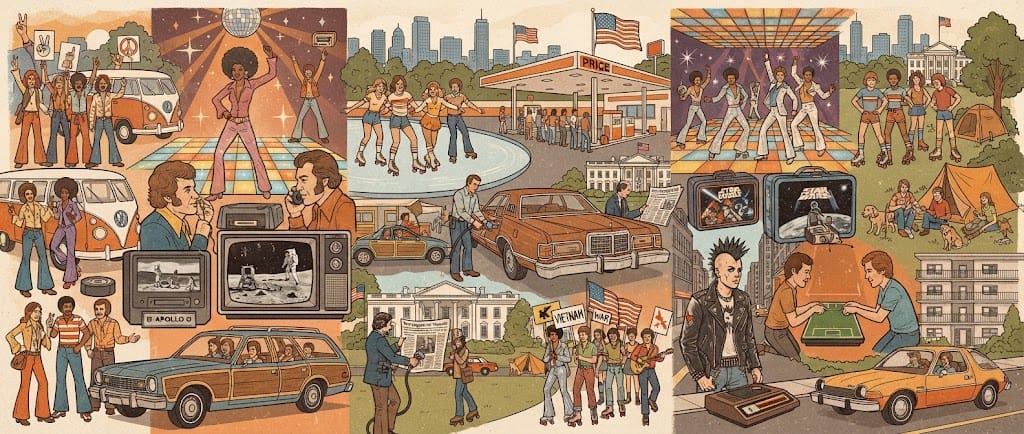
Movies were shifting too, even if they were still finding their footing. MAS*H hit theaters in January, dressing up the Korean War in greasepaint and black comedy because nobody in the audience was confused about which jungle the movie was actually taking aim at. Five Easy Pieces put Jack Nicholson on screen as a walking middle finger to every traditional expectation class and family could throw at him.
The seventies were loud, messy, and driven by people who took a look at the lies coming from the top and spent ten solid years refusing to let anyone sweep them under the rug.
Tomorrow, what the hippies actually built.
Tim
Tim Lowe is a writer, book expert, retired sailor, retail worker, and renaissance man.
He is currently traveling the country and working on his forthcoming book.