
The FBI's War Against the Mafia

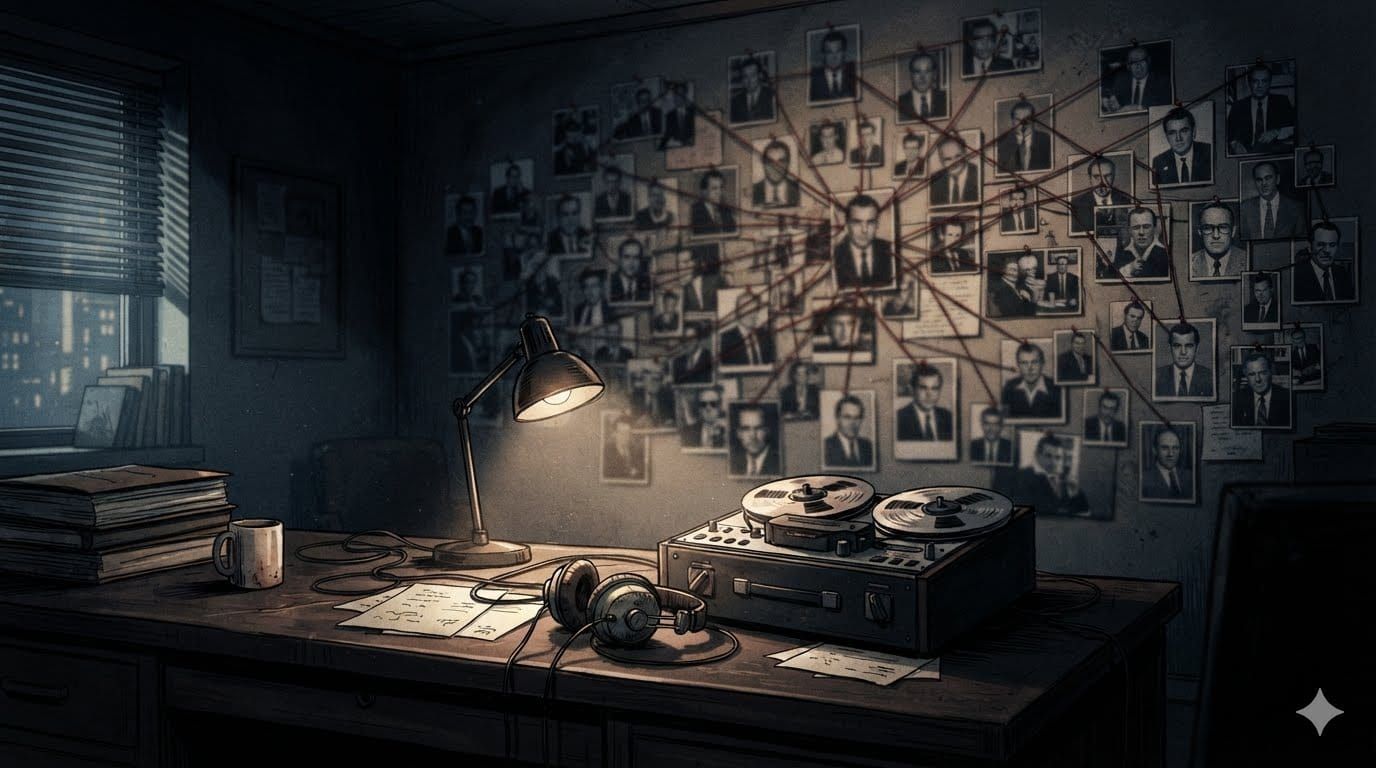
There is a brand of cultural amnesia that allows us to look at the American Mafia not as a collection of brutal, short-sighted sociopaths who extorted fish markets, but as a tragic, deeply cinematic opera about family values and tailoring. We have spent fifty years treating the Five Families like a heavily armed version of the standard corporate hierarchy, which is probably why the story of their demise feels less like a triumph of federal bureaucracy and more like the cancellation of a long-running television show we weren't ready to let go of yet. We loved the idea of the Commission because it suggested that even in the chaotic, nihilistic underbelly of mid-century New York, there was still someone enforcing a dress code. It represented a weirdly comforting paradox: the belief that organized crime was somehow more organized than the society it was actively parasitizing.
But the reality of what happened in 1981, when the entire edifice began to violently unspool, is actually much stranger and far more interesting than the mythological version we bought into. This book, written by Frank Storey, is essentially the autopsy of that myth, performed by the guy who actually wielded the scalpel. For over half a century, the Genovese, Gambino, Lucchese, Bonanno, and Colombo families did whatever they wanted, not because they were criminal geniuses, but because the legal system was fundamentally unequipped to understand what they actually were. The law treated crime as an individual choice, a series of isolated transactions. If a guy got shot in a Brooklyn alley, you went looking for the guy who pulled the trigger, not the guy three layers removed who gave a vague nod over an espresso.
Everything changed because of two things that collided in a bizarrely cinematic fashion: Joe Pistone spent six years pretending to be a jewel thief named Donnie Brasco, and an FBI agent named Frank Storey realized that the government finally had a weapon weird enough to match the absurdity of the mob itself. That weapon was the Racketeer Influenced and Corrupt Organizations Act, or RICO, a piece of legislation that essentially allowed the government to arrest you for the crime of being in a club whose primary purpose was committing other crimes. It was a conceptual shift. It took crime out of the realm of actions and put it into the realm of philosophy.
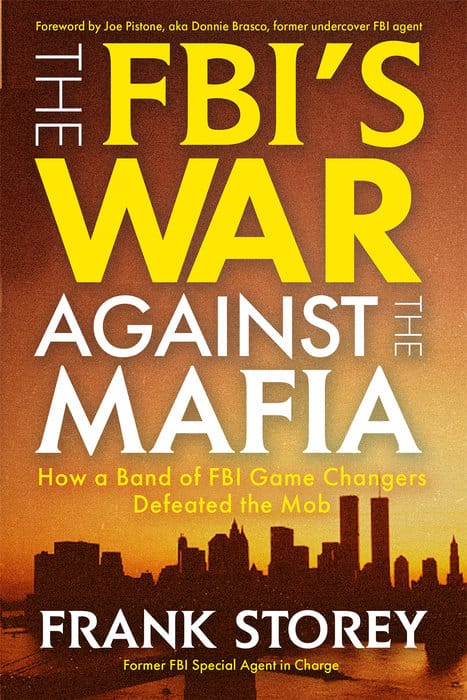
Storey’s narrative is fascinating because it does not read like a standard, self-congratulatory law enforcement memoir. Instead, it reads like the story of an indie rock band trying to record a double album in a basement with borrowed equipment, except the stakes involve seventy actual murders and the existential stability of the eastern seaboard. Storey was handed a crew of one hundred and forty young, profoundly green agents. These were not the seasoned, cynical G-men of Hoover’s imagination; they were kids who were essentially inventing a new form of sociological warfare on the fly. They had to learn how to infiltrate a culture that was explicitly designed to kill anyone who tried to understand it from the outside.
What this book captures better than almost any true crime narrative I have encountered is the sheer, exhausting friction of the process. We like to imagine surveillance as this sleek, high-tech exercise in voyeurism, but in the early eighties, it was a grueling test of human endurance. It was guys sitting in rotting vans for fourteen hours drinking bad coffee, waiting for a mob boss to say something incriminating into a wiretap that might not even be legally admissible if the battery died at the wrong moment. The book systematically deconstructs the glamorous facade of figures like Paul Castellano, the boss of the Gambino family, whose execution outside Sparks Steak House remains one of the defining visual markers of late-twentieth-century New York. Storey takes us inside the actual mechanics of gathering the evidence required to prove that these men were not folk heroes or tragic icons, but the architects of a massive, violent extortion machine.

There is a deep psychological cost to this kind of work that Storey does not shy away from. To catch a monster, you have to spend an enormous amount of time thinking like one, or at least pretending to share their values. The young agents under Storey's command essentially had to bifurcate their existences. They went to work and immersed themselves in a world where human life was a disposable commodity, and then they tried to go home to the suburbs and have normal dinners with their wives and children. The book chronicles the heavy, quiet toll this took on their personal lives. You cannot spend years listening to men plot executions on court-authorized wiretaps without some of that darkness bleeding into your own reality. It is a chronicle of a victory, certainly, but it is a victory that feels heavy, expensive, and entirely devoid of the clean satisfaction we expect from Hollywood endings.
Ultimately, the reason this book matters is that it forces us to confront why we are so obsessed with the Mafia in the first place. We are obsessed because they represented the ultimate manifestation of the American dream gone completely off the rails—the idea that you could build a parallel society based entirely on loyalty, violence, and capitalism, completely untethered from the state. Storey’s unprecedented, inside look at the dismantling of the Commission is the definitive record of the moment that fantasy finally collapsed under the weight of its own internal contradictions and a remarkably dedicated group of federal agents. It is a sprawling, dangerous, and deeply human story about the end of an era, told by the only man who truly knows how the machinery of the Five Families was broken forever. You think you know this story because you have seen the movies, but the movies only show you the flash. Storey shows you the architecture of the collapse, and it is far more compelling than anything Hollywood ever managed to invent.