
The Godfather and the Truth About Power

March, 1972. The Godfather hits the theaters. Three months later, a bunch of low-rent burglars get caught sticking their noses into the Democratic National Committee headquarters at the Watergate.
Now, the simpletons and the mainstream media like to look at that and say, "Oh, wow, look at the timing! What a spooky coincidence!"
Coincidence? There are no coincidences. It’s the same damn story! Francis Ford Coppola’s movie and Richard Nixon’s White House weren't operating in a vacuum. They were drinking from the exact same faucet of pure, unadulterated American disillusionment. The tap was wide open, and the water was filthy.
But of course, getting a movie made in Hollywood means dealing with the suit-and-tie brigade. The management. The shareholders. Paramount corporate executives didn’t want Marlon Brando—he was too old, too difficult, not "bankable" enough. They wanted a nice, safe, profitable commodity. They didn’t want Al Pacino—they said he didn’t have "star power." Translation: he didn't look like a Ken doll. They wanted to shoot the whole thing on a cheap, sterile studio backlot because God forbid they spend an extra buck to capture real life.
Coppola fought these arrogant pricks on every single creative choice. And because he won, he didn't just make another mind-numbing gangster flick for the popcorn-chompers. He created the most devastating, accurate portrait of how power actually functions inside an institution.
And here’s the big secret about power that the people in charge don't want you to know: it doesn't corrupt you overnight. There’s no big, dramatic moment where a guy wakes up and decides to be an evil supervillain. It’s slow. It’s a slow, creeping rot. It recruits people through the good stuff—loyalty, family, love. The people running the club never wake up, look in the mirror, and see a monster. No, they see a good guy. A responsible guy. A guy just doing what the "situation tragically requires." It’s the ultimate self-delusion.
Look at Michael Corleone. He’s the whole pathetic human condition wrapped up in a nice suit. He starts out as the good boy, the war hero, the legitimate outsider. He looks his girlfriend Kay right in the eye and says, "That's my family, Kay, not me." And he believes it! He really thinks he’s separate from the machine.
But watch how the machine eats him alive. Step by step. Rational decision by rational decision. Each one perfectly justified by "protecting the family" and "preserving the institution." By the final frame of the movie, he’s sitting behind the big desk, looking his wife dead in the face, and lying through his teeth about a murder he just ordered. And then? The door slams in her face. The door shuts, and she’s locked out of the truth forever. It is a beautiful, horrifying piece of film making because it shows how a man can completely replace his soul, one reasonable compromise at a time, until he becomes the exact thing he swore he’d never be.
You think that’s just about the mafia? Open your eyes! That was the Nixon administration in a nutshell. Nixon’s boys didn’t think they were villains either. They were patriots! They were protecting the Presidency, the policies, the American Way! And that righteous, self-important belief is exactly what allowed otherwise normal, law-abiding citizens to authorize breaking-and-entering, wiretapping, and obstruction of justice. They convinced themselves that the terrible thing they were doing was actually the responsible thing to do. The movie didn’t need to mention Nixon. It had already diagnosed the whole country’s psychological disease.
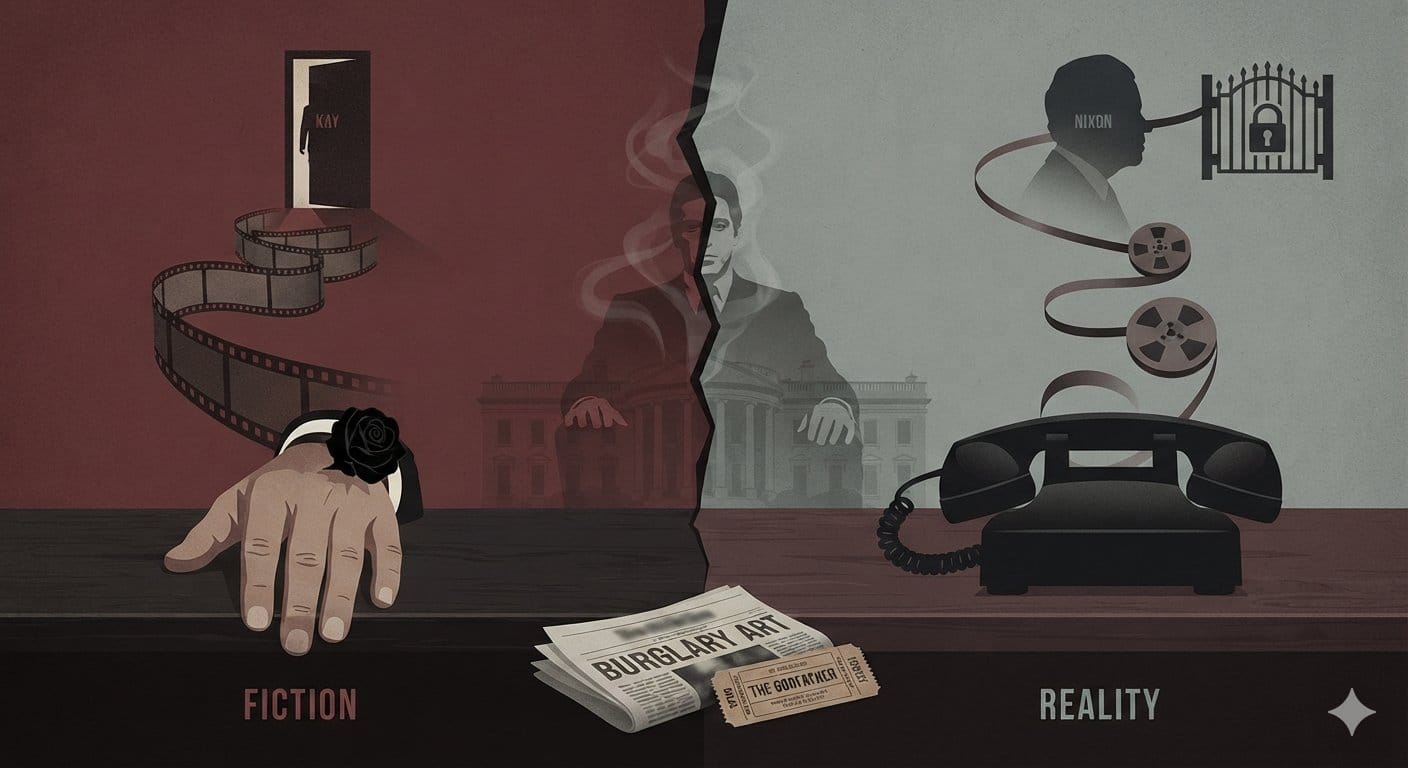
And the public loved it. Highest-grossing movie in history up to that point. Think about the hypocrisy of that for a second. Millions of Americans lined up around the block, paying their hard-earned dollars to watch fictional institutional corruption, while their actual, real-life government was doing the exact same thing behind closed doors just a few miles away.
Why did they flock to it? Because they were already trained! The government had been schooling them for three straight years. Cambodia. Kent State. The Pentagon Papers. The American people had been forced to watch the machinery of institutional self-justification every single night on the evening news. They knew the smell of bullshit, and they recognized it immediately, whether it was Marlon Brando on a silver screen or Richard Nixon on television.
The music that year was dealing with the exact same garbage, too. It was raw, it was honest, and it didn’t blink. Soon, we’re going to talk about Exile on Main St., Stevie Wonder’s Talking Book, and the year David Bowie put on some makeup, called himself Ziggy Stardust, and exposed the whole concept of identity and performance for the grand, theatrical hustle it’s always been.
Tim
Tim Lowe is a writer, book expert, retired sailor, retail worker, and renaissance man.
He is currently traveling the country and working on his forthcoming book.