
The Jackal

The Rise and Fall of Carlos, the World's First Super-Terrorist
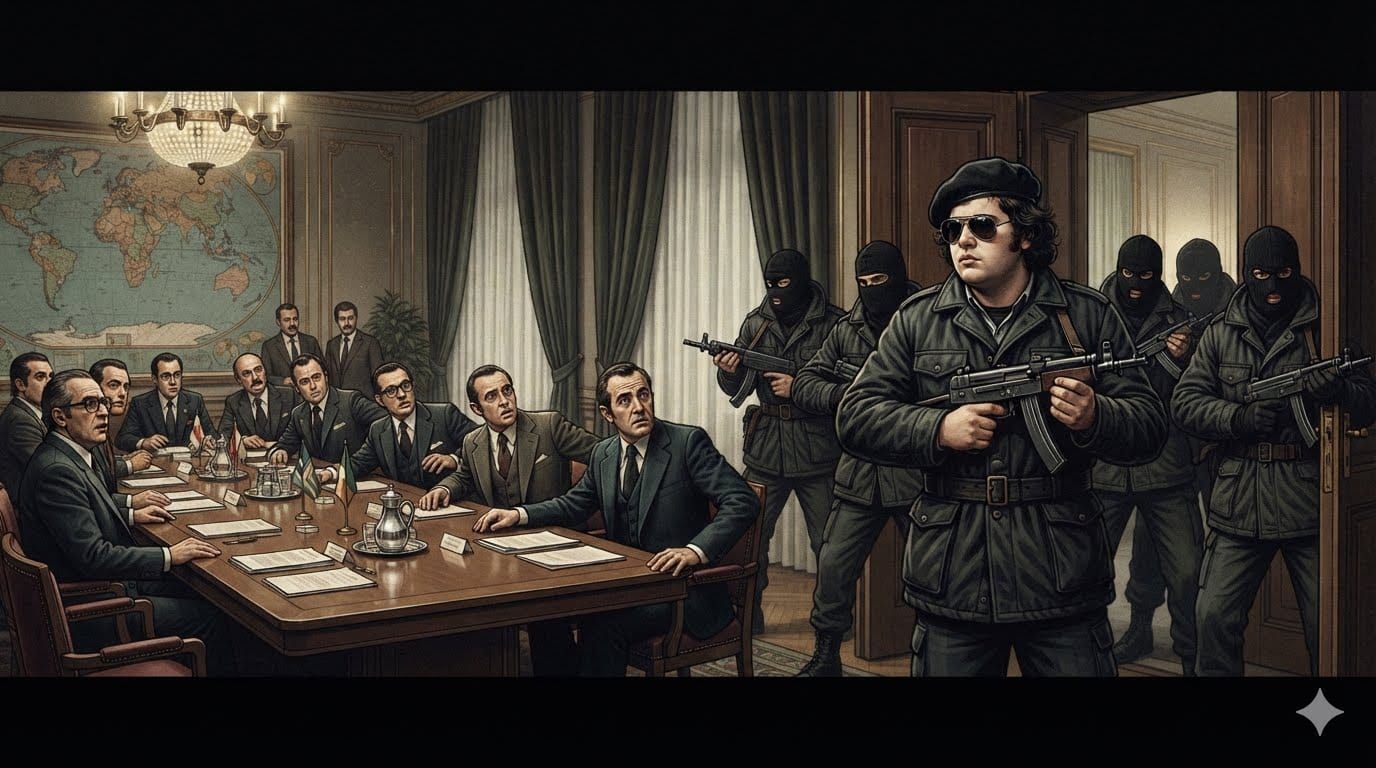
Vienna. December 1975.
The air was bitter. The kind of cold that gets inside your bones and stays there. Inside the OPEC headquarters, eleven oil ministers from the world’s most powerful nations sat around a massive table. They thought they ran the world. They thought the liquid gold beneath their desert sands gave them absolute power.
They were wrong. Because power doesn't belong to the man with the oil. Power belongs to the man with the gun, the plan, and the total lack of a conscience.
The doors burst open. Six people walked in. They carried submachine guns. At the front was a man wearing a black beret and dark sunglasses. He was young. He was heavy-set but carried himself with the easy confidence of an athlete. He didn't look like a fanatic. He didn't look starved or desperate. He looked like a movie star who had wandered onto the wrong set.
His name was Ilich Ramírez Sánchez. But the world would soon know him by a different name.
The Jackal.
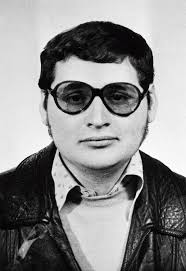
Carlos the Jackal was the first true celebrity terrorist. Before him, terror was a regional affair. It was messy. It was hidden in back alleys and muddy jungles. Carlos changed the rules of the game. He took terror out of the shadows and put it directly onto the television screen. He understood something very basic about the modern world: if it wasn't on TV, it didn't happen. He didn't just want to kill people. He wanted the world to watch him do it.
Joby Warrick’s explosive new book pulls back the curtain on a three-decade career of blood, money, and media manipulation. Warrick is a master storyteller, and here he treats history like a crime scene. He bags the evidence. He tags the bodies. He doesn't guess. He relies on newly declassified archives, secret police files from the old Soviet bloc, long-repressed eyewitness accounts, and a rare, chilling interview with the Jackal himself, conducted from inside a French prison cell.
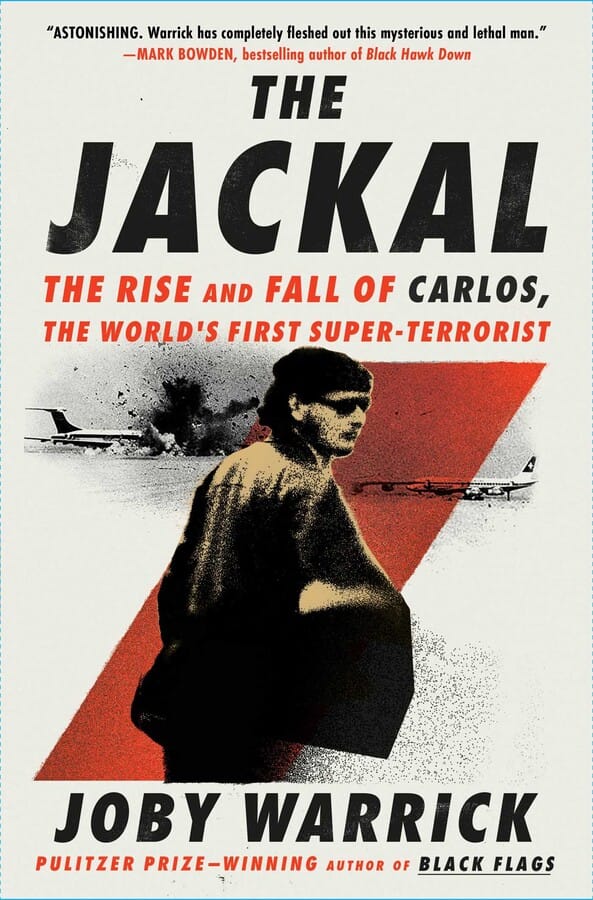
What Warrick uncovers is a story that reads like a high-stakes thriller, but every single word of it is terrifyingly true.
Most modern terrorists are driven by a twisted sense of religious or political ideology. They are willing to die for a cause. They wear rags and live in caves. Carlos was the polar opposite. He prized large paychecks over politics. He was a mercenary. A terrorist-for-hire. He styled himself as a swashbuckling lady’s man, an international playboy who drank expensive champagne, wore tailored suits, and stayed in five-star hotels. He used politics as an excuse to live like a king.
But beneath the charm and the expensive cologne, he was a monster. He murdered his victims with callous disregard. Often with his own hand. A double-tap to the head. No hesitation. No regret. To Carlos, human life was just a line item on a balance sheet. If killing you helped him secure his payout, you died. It was that simple.
For twenty years, Carlos was the most wanted man on the planet. He was a ghost moving between safe houses in East Berlin, Damascus, and Khartoum. But he wasn't just hiding. He was working. Cold War autocrats and brutal dictators used him as a secret weapon. Need to eliminate a political rival in a foreign capital? Call the Jackal. Need to blow up an airport to send a message to a Western government? Call the Jackal. He approached terror with a professional’s devotion to craft. He studied blueprints. He calculated firing lines. He knew how much plastic explosive it took to bring down a wall, and he knew exactly how much panic it would cause on the evening news.
The 1975 Vienna hostage crisis was his masterpiece. He didn't just kidnap a few diplomats. He kidnapped an entire international conference. He demanded a school bus. He demanded a plane. He forced the Austrian government to broadcast his political manifesto on television every two hours. He held the global economy hostage for a multi-million-dollar ransom. And when the dust settled, he walked away with the cash.
It was spectacular. It was theatrical. And it changed the world forever.
Warrick shows us that we are still living in the world that Carlos built. The borderless terrorist attacks we see today—the ones designed specifically to capture the attention of twenty-four-hour news cycles and social media feeds—all trace their lineage back to the black-bereted man in Vienna. Carlos was the pioneer. He created the blueprint for modern asymmetric warfare. He showed the world's weakest actors how they could bring the world's strongest superpowers to their knees using nothing more than a camera and a willingness to commit mass murder.
Today, Carlos sits in a cell in a maximum-security prison. He is an old man now. The swagger is gone. The tailored suits have been replaced by prison denim. But behind those bars, he can still see his influence reverberating across the globe. He watches the news. He sees the architecture of modern security, the concrete barriers outside public buildings, the armed guards at airports, the endless lines at metal detectors. He knows he caused that. He knows he forced free societies to change how they live.
This book is not just a biography of a killer. It is a terrifying autopsy of the modern age. It is a meticulous examination of a singular criminal mind. Joby Warrick writes with a lean, driving prose that mirrors the relentless pace of a manhunt. He doesn't waste words. He doesn't offer easy answers. He just lays out the facts, piece by brutal piece.
If you want to understand where the modern nightmare began, you need to read this book. Because before there was a war on terror, there was a man in a black beret. He had a gun in his hand, a camera in his face, and a finger on the trigger.
His name was Carlos. And this is his story.