
The People's Historian

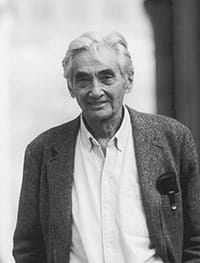
Some people spend their entire life quietly getting on people's nerves for the best possible reasons, and Howard Zinn was perhaps the best example the twentieth century managed to produce. He flew bombing missions in the Second World War and then spent the rest of his life questioning why bombs get dropped at all. He taught at a small women's college in Atlanta and somehow helped detonate the Civil Rights Movement. He wrote a book that sold more than four million copies despite being, by any reasonable publishing logic, the sort of thing that should have sold four hundred copies to graduate students and then vanished. Somebody, clearly, needed to write his biography, and in The People's Historian, Dave Zirin has done just that, with the kind of thoroughness that suggests he actually read Zinn's personal papers rather than merely admiring them from a respectful distance.
I should say up front that I am predisposed to like any book about a man who spent decades annoying the correct people, and Zinn annoyed an impressive cross-section of them—university administrators, FBI agents, several presidents, and at least one college president who fired him for the crime of teaching his students to think, which is generally considered part of the job description elsewhere in academia. What makes Zirin's book more than a simple hagiography, however, is its insistence on placing Zinn not on a pedestal but in a chair, in a room, in a specific decade, doing something that seemed, at the time, considerably less heroic than it now looks in hindsight.
Take Spelman College, where Zinn taught in the late 1950s and early 1960s. It was, on paper, an unlikely staging ground for revolution—a small, respectable, historically Black women's college in Atlanta, the kind of institution built to produce dutiful graduates rather than agitators. And yet it was here, apparently, that a number of young women who would go on to become foundational figures of the Civil Rights Movement first encountered a professor willing to treat their political instincts as intellectually serious rather than merely disruptive. This is the sort of thing that sounds tidy and inevitable when compressed into a single sentence of history, and Zirin's real service is showing how thoroughly untidy and un-inevitable it actually was—how easily Zinn could have kept his head down, kept his job, and kept his opinions to grading papers.
He did not, of course, and the price for this was regularly being fired from institutions that preferred their historians to describe the past rather than participate in it. This is one of the more interesting threads Zirin pulls at: Zinn was, throughout his life, a working historian who kept insisting that history was not a museum exhibit behind glass but something closer to a family argument still very much in progress at the dinner table. It is an occupational hazard of historians generally to imagine themselves above the fray, dispassionately cataloguing the follies of earlier generations from a safe distance of several decades. Zinn seems to have found this an absurd pretense and abandoned it almost immediately, wading directly into the fray himself, at one point traveling to Hanoi during the Vietnam War to help negotiate the release of American prisoners—not the sort of extracurricular activity typically found on a tenure application, though one wonders if it ought to be.

What emerges from all this, and from Zirin's evident affection for his subject without descending into worship of him, is a portrait of a man whose defining quality was not brilliance, exactly, nor even courage, though he had plenty of both, but a stubborn and rather old-fashioned belief that ordinary people were the actual engine of history, and that historians had spent altogether too long writing books about the people driving the train while ignoring everyone shoveling the coal. This, in essence, became A People's History of the United States, a book that managed the neat trick of being both a bestseller and a provocation, deeply beloved by millions of readers and deeply loathed by a smaller but louder contingent who felt, not unreasonably from their perspective, that history was supposed to make Americans feel better about being American rather than occasionally uncomfortable about it.
Zirin does not shy away from the controversies that trailed Zinn for the rest of his career, nor does he pretend Zinn was some flawless secular saint; the book is far more interesting for allowing its subject the ordinary human capacity to be wrong, stubborn, and occasionally insufferable, alongside his more obvious virtues. What comes through instead, chapter after chapter, decade after decade, is the peculiar consistency of the man—the same professor arguing with the same conviction in 1963 as he was in 2003, through the Depression and the war and the civil rights struggle and Vietnam and all the disappointments and vindications that followed, right up until his death in 2010.
It would be tempting to describe The People's Historian as simply timely, given how thoroughly the present moment seems to be rehashing arguments Zinn spent his whole life having. But Zirin's real achievement is subtler than timeliness: he has written a biography that treats its subject the way Zinn himself insisted history be treated—not as a settled verdict, but as an ongoing and rather noisy conversation, one Howard Zinn is, in his own stubborn way, still very much part of.