
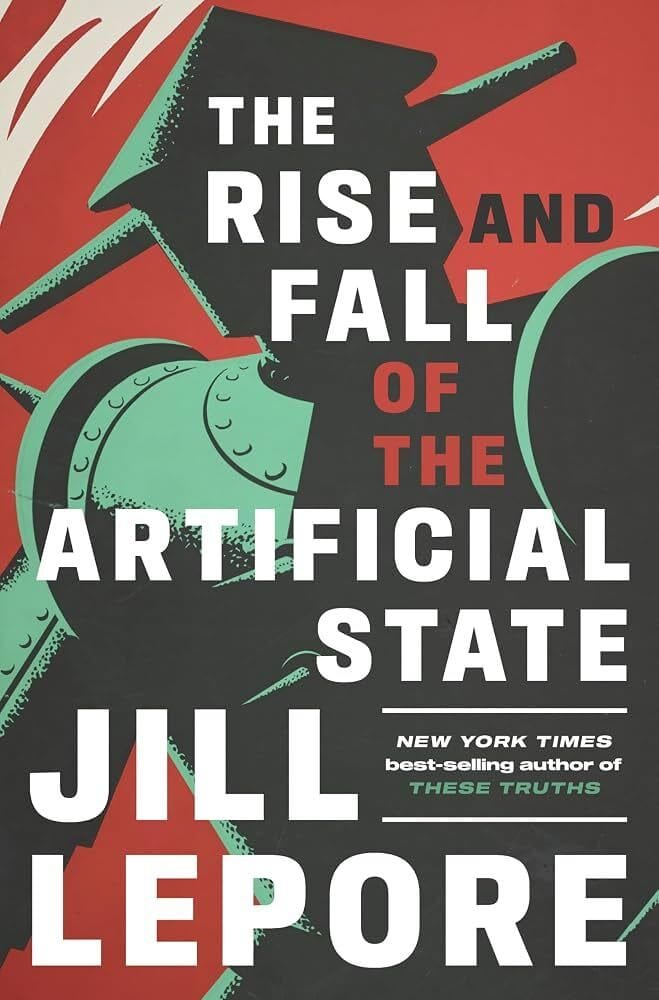
The Rise and Fall of the Artificial State

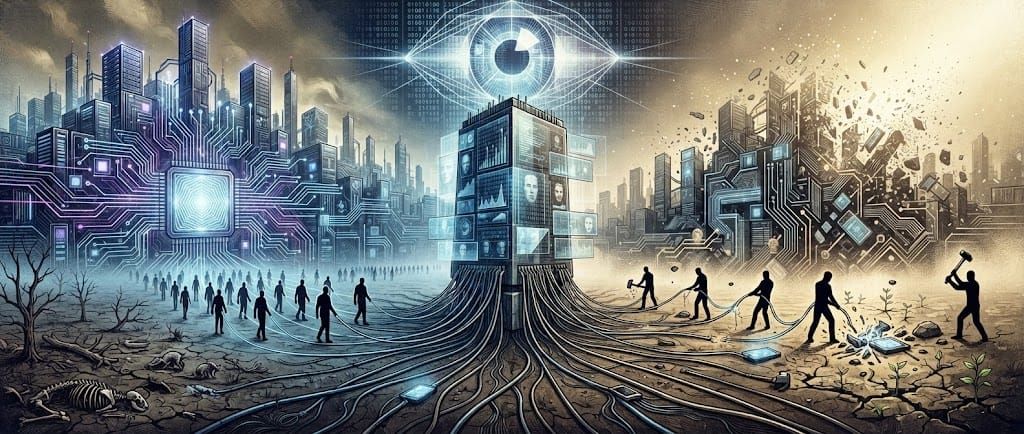
The air in the server room was always cold, smelling faintly of ozone and hot copper, but out here, in the blinding neon glare of Cambridge, the world was burning. Jill Lepore sat at her desk, the glow of a monitor washing over a face that had spent too many years decoding the ghosts of America’s past, only to find herself staring down a digital leviathan that made those ghosts look like children’s toys. It was a Tuesday afternoon when the realization hit her, sharp and unyielding as a switchblade: the twentieth century was dead, buried under an avalanche of silicon and glowing glass, and nobody—least of all the people writing the code—had noticed they were digging the grave.
For years, the tech barons had sold a simple gospel, whispered in the antiseptic echo chambers of Silicon Valley and amplified by the chorus of venture capitalists who viewed human beings as little more than latency to be optimized. They promised a frictionless utopia, a playground where algorithms would solve the friction of democracy, smoothing out the messy, loud, brawling enterprise of self-government into clean, predictable lines of code. But Lepore, pulling at the threads of history with the relentless precision of a veteran trial lawyer, saw the machinery for what it actually was. It wasn't liberation. It was a coup in slow motion, funded by venture capital and executed by men who looked at the Bill of Rights and saw only a legacy system waiting to be deprecated.
The genesis of the catastrophe didn't happen in a vacuum. It began in the sterile boardrooms where the architecture of the modern attention economy was forged, a place where human beings were reduced to data points, churned through attention-mining algorithms designed to monetize outrage and starve nuance. Campaigns that once relied on handshakes, town halls, and the messy rhetoric of persuasion were now awash in an army of synthetic bots, non-human actors whispering lies into the ears of millions of voters who had no idea they were arguing with a server rack in northern Virginia. Political discourse had been flattened into a binary loop of engagement metrics, managed by multinational media conglomerates whose algorithms treated the truth as a rounding error.

It was Hannah Arendt who had mapped the blueprint back in nineteen-fifty-one, warning a fractured world how the machinery of modern totalitarianism could hollow out the fundamentals of human existence until nothing was left but obedient cogs. Lepore took Arendt’s terrifying framework and updated it for an era where the terror didn't wear a jackboot or hold a rifle; it wore a Patagonia vest and spoke in the soothing, modulated tones of an artificial intelligence assistant designed to maximize ad revenue. The liberal nation-state, that hard-won, fragile experiment in human dignity, wasn't collapsing under the weight of an invading army. It was being dismantled from the inside out by billionaire technocrats who viewed democracy as an inefficient bottleneck and autocracy as a feature, not a bug.
The symptoms were everywhere, hiding in plain sight behind the glossy marketing of convenience. Human legislatures, slow and deliberative by design, were being sidelined in favor of the ultimate technocratic fantasy: a digital citizen's assembly where an artificial intelligence system would recommend the course of action, quietly usurping the role of human representatives. It was government without consent, and eventually, government without humans. Yet the cost wasn't just political. While the server farms hummed night and day, slurping down megawatts of electricity and vomiting carbon into the atmosphere, the natural world was being quietly liquidated. Biodiversity plummeted, ancient habitats vanished beneath asphalt and cooling towers, and the living earth was treated as an externality on a spreadsheet managed by a machine that didn't even know what a tree was.
Yet to read Lepore’s account is to realize that this was never an act of God. It was a choice, engineered by men who profited from our surrender. Feudalism had fallen. Slavery had fallen. Totalitarianism, in its darkest twentieth-century incarnations, had been broken by human hands working together in the harsh light of history. The rise of the artificial state was no more inevitable than the weather; it was built out of specific parts, funded by specific accounts, and justified by a specific mythology that could be systematically dismantled.
This is the manifesto for a new century, an elegiac, furious wake-up call that refuses to accept the digital cage as our final destination. The future has not yet been written, and for those willing to look past the glowing screen and remember what it means to be human, the hardest, most necessary work of taking the machine apart has only just begun.