
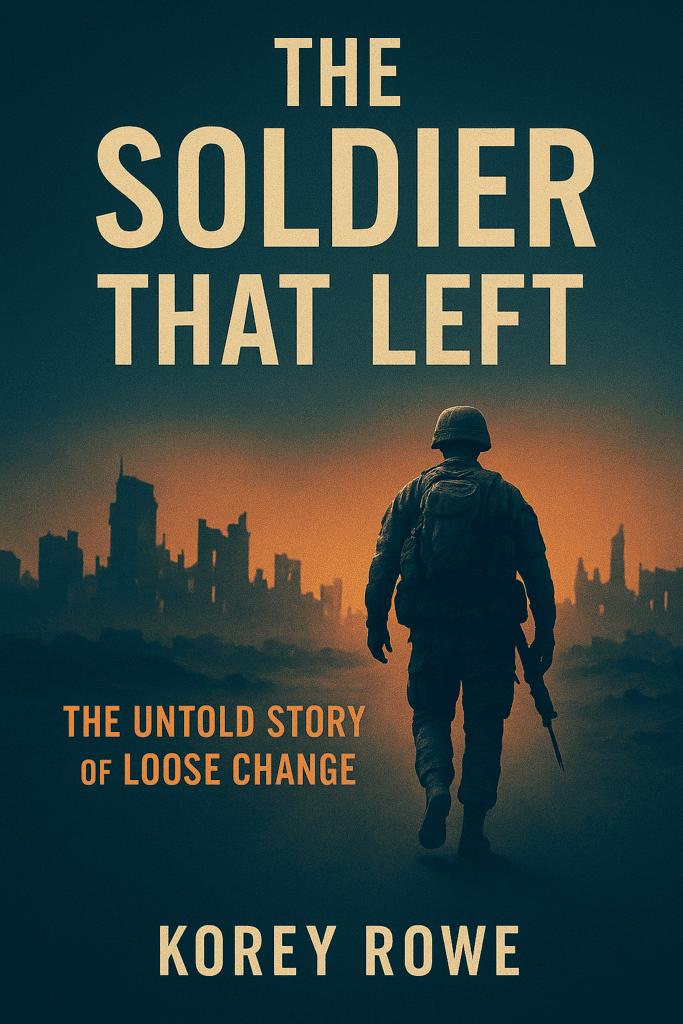
The Soldier That Left

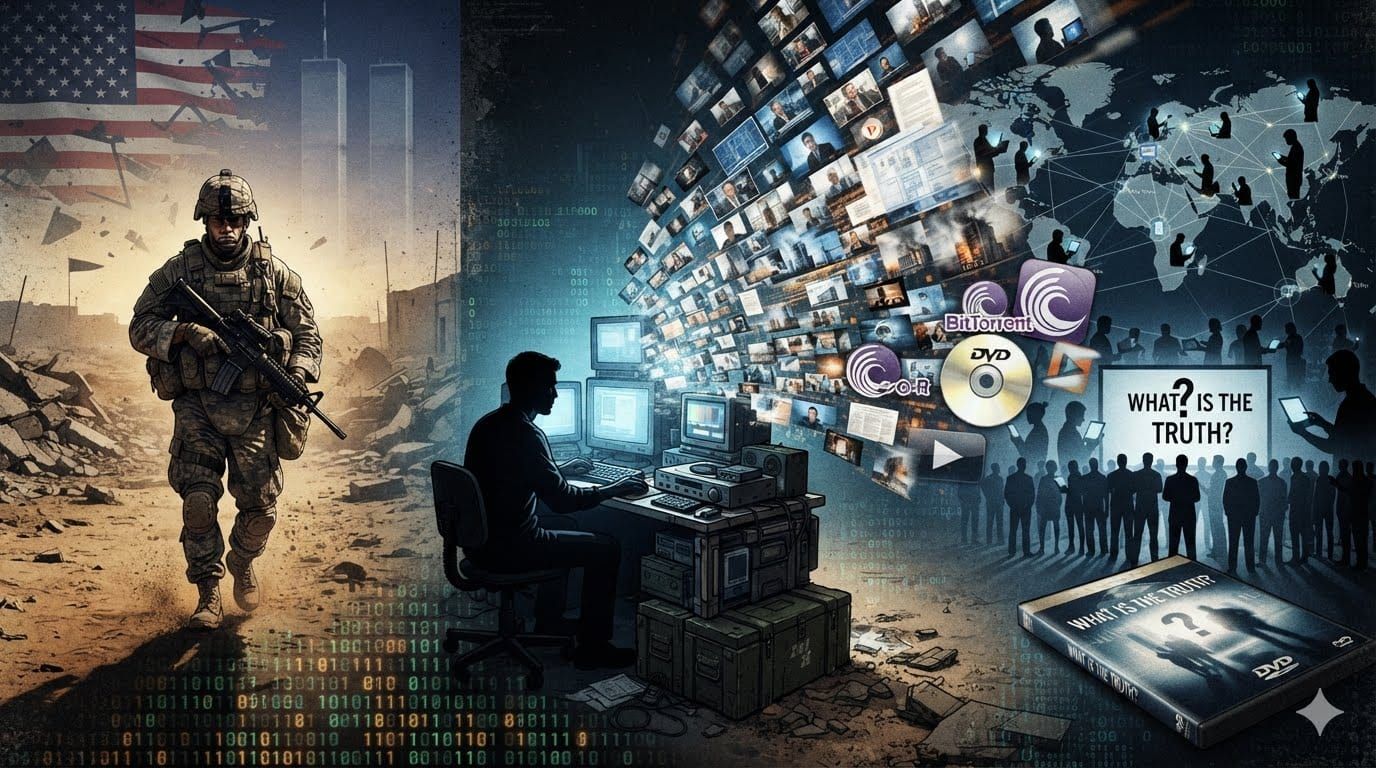
The dirt of Iraq doesn’t wash off easy. It gets down into the lines of your hands, under your fingernails, and deep into the part of a man’s soul where he keeps his truth. Korey Rowe went into that dirt a soldier, a boy from Oneonta, New York, who signed up before the sky fell on September 11, 2001, back when the uniform still felt like a shield instead of a shroud. He went to Afghanistan and then to Iraq, carrying the weight of a nation’s fury on his back, only to find out that the reasons they gave him for the blood and the heat were as hollow as an old gourd left to rot in the sun.
In his raw, unflinching new memoir, The Soldier That Left: The Untold Story of Loose Change, Rowe lays out a story that feels less like a confession whispered in the dark, heavy with the scent of cordite, stale tobacco, and the cold sweat of a man running for his life.
Rowe saw the violence up close—not the clean, cinematic kind they show on the evening news, but the jagged, senseless kind that leaves a boy’s mind permanently fractured. He watched the futility of it all, the grinding gears of a military machine that traded young lives for lies about weapons of mass destruction that never were. When the Army tried to pull him back in with a stop-loss order—a bureaucratic trick that felt like a prison sentence—Rowe hit his breaking point. He looked at the desert, he looked at his conscience, and he chose to walk away.
Desertion is a heavy word in this country. It brands a man. It turns neighbors into judges and the homeland into a hunting ground. But Rowe chose the brand over the lie.
He ran straight into a cultural hurricane.
On the lam, carrying the invisible wounds of a war he couldn't justify, Rowe reconnected with his childhood friend, Dylan Avery. Dylan was a kid with a camera and a head full of burning questions about the day the towers came down. Together, operating out of a cramped room on a shoestring budget, they started splicing together footage, asking the kinds of questions that make powerful men uncomfortable. They didn't know they were building a bomb. They thought they were just making a movie.
That movie was Loose Change.
Before Netflix, before streaming algorithms, and before the internet became a town square owned by billionaires, there was a wild, lawless digital frontier. Loose Change caught fire out there in the dark. It passed from hand to hand on burned DVDs, downloaded through dial-up connections and early torrent sites like a forbidden text. It was a low-budget, jagged piece of filmmaking that Vanity Fair would later call “the first internet blockbuster.” It ignited the 9/11 Truth Movement, forcing millions of ordinary people to look at the official narrative and wonder if they’d been lied to about the home front the same way Rowe had been lied to on the front lines.
But The Soldier That Left isn't just a history lesson about a viral documentary. It is the deeply personal reckoning of a man who found himself caught between two fronts. Rowe was fighting the U.S. Army on one side and a roaring media backlash on the other. He writes with a bruising honesty about the collateral damage of that fight—the slide into addiction, the paranoia of being watched, and the agonizing search for who he was supposed to be once he took the uniform off for good.
It is a story of brotherhood, forged in the innocence of youth and tested by global notoriety. Rowe and Avery were just a couple of outsiders who somehow managed to tilt the axis of the 21st century’s conversation about truth, power, and history. They paid a price for it, of course. You don't throw rocks at a tank without getting hit by the exhaust.
Rowe’s voice in these pages is weary but resolute, the voice of a man who has traveled through the fire and come out the other side with his skin burned but his eyes wide open. He reflects deeply on the heavy toll of dissent, the permanent weight of a reputation you can never outrun, and what happens when a handful of young men change the world before they even figure out how to live in it.
The Soldier That Left: The Untold Story of Loose Change is a dispatch from the edge of an era, a haunting reminder of what it costs a man to save his own soul when the whole world is telling him to sell it.