
Today's Book:

Whistler by Ann Patchett
There is a distinct, universal anxiety that comes with wandering through a crowded museum. You are surrounded by centuries of human history, staring at oil paintings or marble sculptures, trying to find a moment of quiet reflection while shuffling alongside hundreds of strangers. But what if you looked away from the art and realized that one of those strangers was staring directly at you? Even worse, what if they were actively following you from gallery to gallery?
That is the exact, cinematic hook that launches Whistler, a deeply moving and quietly profound story that handles the massive weight of memory, lost time, and human connection with a remarkably light touch.
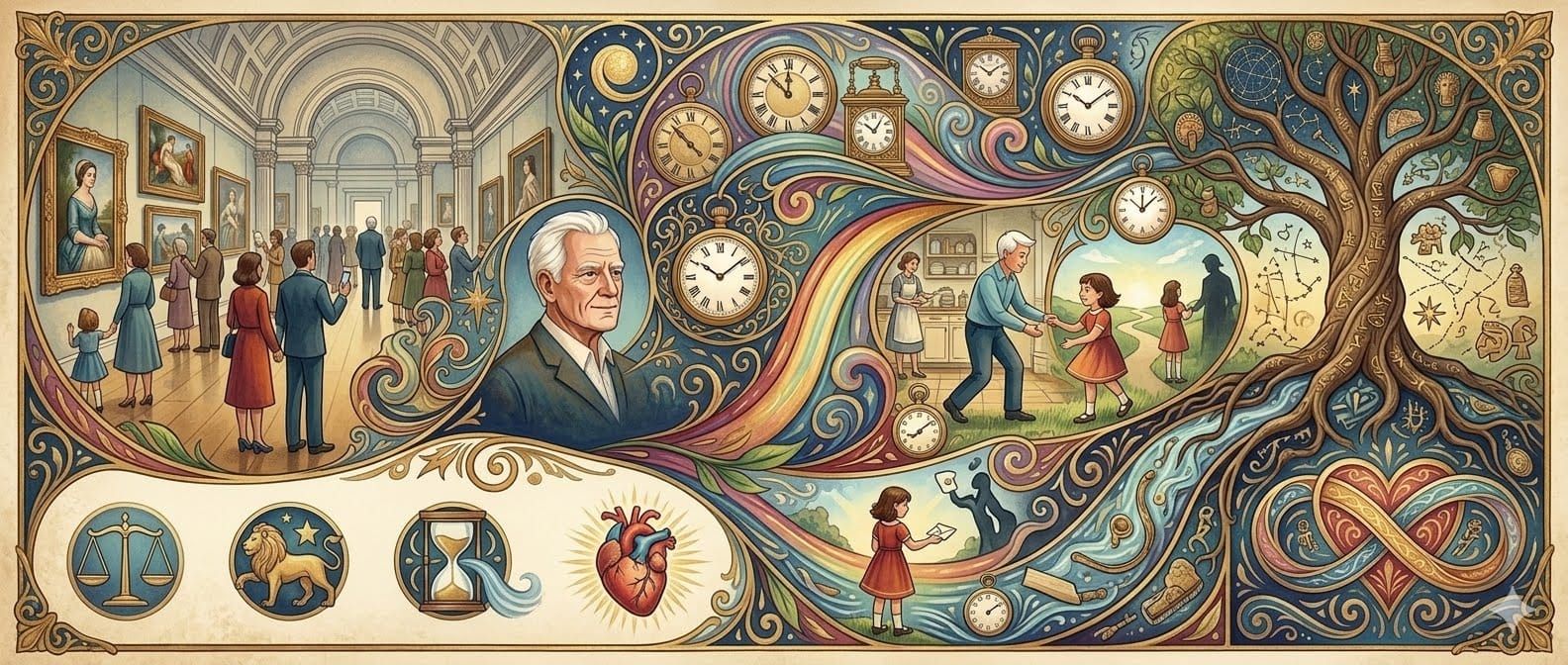
The story opens in the grand, echoing halls of the Metropolitan Museum of Art. Daphne Fuller is fifty-three years old, enjoying a routine afternoon at the museum with her husband, Jonathan. The day takes a sharp, unsettling turn when Jonathan notices an older, white-haired gentleman tracking their movements through the exhibits. He isn't looking at the artifacts on display; his eyes are locked entirely on Daphne.
When they finally confront him, the tension evaporates into pure, disorienting shock. The man isn’t a stranger at all. He is Eddie Triplett—Daphne’s former stepfather.
To call Eddie a major figure in Daphne's life is both entirely accurate and structurally complicated. He was married to Daphne’s mother for a little more than a year when Daphne was just nine years old. It was a brief, fleeting blip in the grand timeline of her childhood, but it was a year defined by an intense, foundational bond. And then, it was over. A sudden, monumental family crisis shattered the marriage, fracturing their lives and scattering them in opposite directions.
Daphne hadn't seen or spoken to Eddie since that fateful day. Decades passed. She grew up, built a life, married Jonathan, and aged into her fifties, leaving the ghosts of her childhood behind in the rearview mirror. Until now.
What happens next is where the heart of the narrative truly beats. When Daphne and Eddie look at each other in the middle of the Met, the forty-four years of separation simply dissolve. Anyone who has ever run into an old friend or a long-lost relative knows the bizarre, dizzying sensation of temporal collapse—the feeling that you are simultaneously a grown adult and a vulnerable nine-year-old child standing in the exact same shoes.
Despite the brevity of their original time together, the impact they had on one another was permanent. As they stand among ancient relics, they realize that the connection they shared wasn't just a childhood memory; it was the anchor for who they eventually became. Reunited by sheer, unpredictable cosmic luck, the two adults make a silent, mutual vow: they have absolutely no intention of ever being separated again.
Whistler transitions from a mystery into a beautiful, retrospective journey. It becomes a story about two adults standing on the back half of their lives, looking over the shoulder of time at the choices they made—and, perhaps more painfully, the choices that were made for them by the chaotic adults in their past. It tackles heavy, bittersweet themes: the quiet bravery it takes to face old wounds, the reliability of our own memories, and the endless stream of loss that eventually comes for every single one of us as the years tick onward.
Delivering a story like this requires an incredible amount of narrative restraint. In lesser hands, a plot about a long-lost stepfather reappearing at a world-famous museum could easily spiral into a melodramatic soap opera, weighed down by cheap plot twists or over-the-top emotional manipulation.
This is precisely where the genius of Ann Patchett comes into play.
As an author, Patchett has spent decades cementing herself as a master of the contemporary American novel. Whether she is exploring a hostage crisis in Bel Canto or the sweeping, multi-generational family dynamics of The Dutch House and Tom Lake, Patchett’s superpower has always been her profound empathy for her characters. She doesn't write villains; she writes beautifully flawed, deeply recognizable human beings trying their best to navigate the messy, unscripted realities of life.
In Whistler, Patchett operates at the absolute peak of her powers. Her writing is celebrated for its elegant simplicity—she never uses five complex words when two perfect ones will do. By keeping the prose clean and grounded, she allows the raw emotional weight of Daphne and Eddie’s reunion to breathe. Patchett understands that the most consequential moments of our lives are often the smallest ones: a shared look in a hallway, a quiet conversation over coffee, or a hand reaching out across a forty-year gap.
Ultimately, Patchett has given us a book that serves as an antidote to the cynical, fast-paced nature of modern pop culture. Whistler is a gentle, life-affirming reminder of how love endures beneath the surface of our busy daily lives. It proves that the feeling of truly being seen and known by one other person—even if it only lasted for a single year when you were nine years old—is powerful enough to change the trajectory of your entire universe.
If you are looking for a book to discuss with your friends, your family, or your local book club this season, put this one at the very top of your stack.