
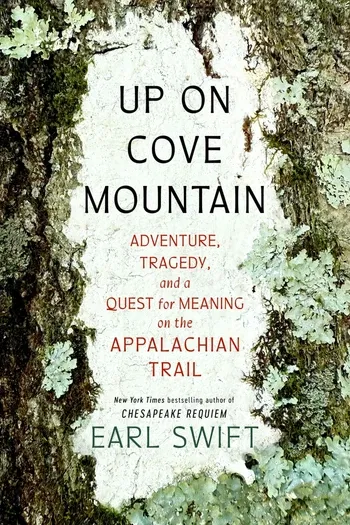
Up on Cove Mountain

Adventure, Tragedy, and a Quest for Meaning on the Appalachian Trail
The mountains do not care about your plans, and they do not keep your secrets, but they have a way of holding onto a ghost better than any graveyard ever could. If you walk long enough through the high, green cathedrals of the Appalachian Trail, where the dirt is rich with the rot of a thousand autumns and the fog hangs low and heavy like wet wool, you will eventually find yourself walking with things you thought you left behind.
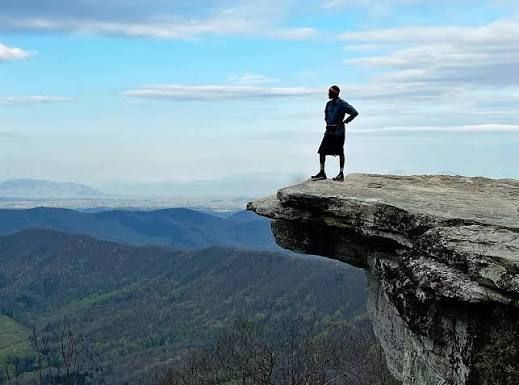
Back in 1990, Earl Swift was a boy with mud on his boots and the kind of restless fire in his belly that only a long, hard walk across fourteen states can cure. He went into the woods of Maine a young man searching for the edge of himself, and by the time he scraped the red dirt of Georgia from his boots, the trail had hammered him into something sharper. It made him a thinker who could see through the thickest brush, a problem solver who knew that when the mountain gives you a vertical wall of rock, you do not curse it; you just find the toehold. It gave him a lifelong reverence for the quiet, holy places where the world is still exactly as God left it.
But the trail is a thief, too. It steals your skin, your vanity, and sometimes, if you are unlucky, it steals your peace.
Early in that first great odyssey, heading south under the canopy of giants, Swift shared the dirt and the shade with two other south-bounders. They were the kind of people you want to find out there—friendly, capable, bighearted folks who moved through the wilderness with a quiet respect. They did everything right. They hung their food from the bears, they watched their step on the slick shale, and they treated the back country like the sanctuary it was supposed to be. Yet, a few weeks down the ridge, at a lonely, windswept campsite up on a Pennsylvania mountaintop, those two beautiful souls were murdered. It was a senseless, jagged burst of violence that left the killer silent and the living with a hollow place in their chests.
For thirty-four years, that cold memory sat in the dark of Swift’s mind like a wet stone. He went on to live a big, full life, writing books and chasing stories, but the questions kept gnawing at the edges of his sleep. Why them? Why did a murderous madness find two people who possessed nothing but kindness, while other hikers—flawed, careless, and perhaps far more likely candidates for disaster, including Swift himself—were allowed to just keep walking? How does something so ugly, so entirely human in its cruelty, bleed into the sylvan loveliness of the high country, a place that by all rights should be the safest sanctuary on earth?
In 2024, with his joints a little stiffer and his hair the color of a winter sky, Swift went back. He went to see if a man in his sixties could still conquer the grueling, roller-coaster spine of the American East. But mostly, he went to look those old ghosts in the eye.
The result of that second, heavy-hearted journey is Up On Cove Mountain, an arresting, magnificent chronicle that is as much a swashbuckling adventure as it is a deeply moving meditation on the weight of survival. Swift writes with the precision of a master journalist and the bruised soul of a man who knows that the wilderness is beautiful precisely because it is indifferent to us.
To read this book is to feel the sting of the wind on a high ridge and the sudden, freezing clutch of an old fear. It is a story about the nature of risk, the terrifying randomness of fate, and the heavy baggage we carry when we emerge from the trees alive.
If you have ever looked up at a mountain and wondered what lies hidden in the shadow of the pines, you need to read Up On Cove Mountain. It is a masterpiece of the trail, written by a man who survived it twice.